

Best Matcha: How to Spot It and Which One to Buy
Everyone sells "the best matcha." Nobody shows you how to check. Here are the five criteria you can read right on the package, the grades explained without marketing, normal prices in Canada, and an honest answer to the question you're actually asking: which one to buy.
The best matcha isn't a brand: it's a set of verifiable criteria. A named Japanese region (Uji, Nishio, Yame), a spring first harvest, an identified cultivar, a vivid jade-green colour and a recent harvest date. A matcha that displays all five has nothing to hide; a matcha that displays none of them has good reasons to stay quiet. From there, "best" depends on your cup: a soft first-harvest matcha to drink straight, a bolder profile for lattes. This guide gives you the criteria, price benchmarks for Canada, and our selection with full transparency: yes, we sell matcha, so we're also giving you the tools to judge ours.
"Best matcha": the wrong question, and the right one
Search "best matcha" on Google and you'll land on rankings of brands their authors often never tasted. The problem with those lists is that they answer the wrong question. Matcha isn't a single product you can rank from best to worst: it's a family of teas whose quality depends on the leaf, the harvest and the milling, and whose "best" changes with what you want to do with it.
The right question comes in two steps. First: is this powder objectively well made? That can be verified, and it's what the next section covers. Second: does it suit the way you drink it? A matcha that's perfect for drinking straight can disappear completely under the milk of a latte, and an excellent latte matcha can feel too insistent whisked with water alone. Both are "the best", just not in the same cup.
This guide equips you for both questions. If you'd rather start with the basics (what matcha is, how it's produced), begin with our guide on how to choose matcha, then come back here to decide.
Best matcha powder: the 5 criteria that don't lie
A quality matcha powder can be recognized before you even open the pouch, because producers who do things right say so. Here are the five pieces of information to look for on the package or the product page, and what each one tells you.
| Criterion | What you should see | Why it matters |
|---|---|---|
| Origin | A named Japanese region: Uji, Nishio, Yame... | "Product of Japan" with no detail says nothing; a named region puts the producer's reputation on the line |
| Harvest | First harvest (spring), ideally with the year | The first leaves concentrate sweetness and umami; later harvests give more bitter powders |
| Cultivar | A variety name: Okumidori, Yabukita, Samidori... | The finest level of traceability, the equivalent of a grape variety for wine |
| Colour | Vivid jade green, almost electric | A dull, khaki or yellowish green betrays a late, old or poorly stored leaf |
| Freshness | Recent harvest or milling date, opaque resealable pouch | Matcha oxidizes fast: colour, aroma and sweetness decline within months once exposed to air |
None of these criteria require tasting, or trusting an ad. If a product page stays vague on all five, the mystery is never good news. Our article on recognizing good matcha shows what these criteria look like in the bowl: the colour, the texture of the foam, the aroma.
Ceremonial or culinary: the grade before the brand
Before comparing brands, you need to compare grades, otherwise you're comparing products that don't play in the same league. The vocabulary isn't regulated, but common usage distinguishes two big families.
Ceremonial matcha is made to be drunk: young first-harvest leaves, shaded before picking, stripped of stems and veins, slowly stone-ground. The result is a fine, soft powder, rich in umami, that drinks well with just water and no harsh bitterness. It's the grade you want for drinking matcha straight, and honestly for a great latte too. Our ceremonial matcha guide goes into detail.
Culinary matcha comes from later harvests, with a more astringent profile that holds its own in a recipe (cookies, creams, smoothies) but turns rough drunk as is. It costs less, and that's normal: it's made for cooking, not for sipping.
The classic shopping trap is the word "premium": it corresponds to no defined grade and often serves to sell a culinary matcha at ceremonial prices. When a package says "premium" without naming a harvest or a region, reread the line above: the grade before the brand, and the criteria before the grade. To go deeper on the labels, we broke it all down in our article on matcha grades.
The best matcha brand? Look for transparency, not a logo
It's the question that comes up most often, and the most useful answer isn't a name: it's a method. A serious matcha brand, whether Japanese, Canadian or from anywhere else, can be recognized by three behaviours.
It documents its powder. Region, harvest, cultivar, ideally the producer: everything is written down, on the package or the product page. You don't have to ask the question; the answer is already there.
It sells a coherent range. Be wary of catalogues lining up fifteen matchas at every price point: it's often the sign of an assembler buying mixed lots and putting nice labels on them. A house that selects its teas has a short range, and can explain why each reference exists.
It stands behind what it sells. A money-back guarantee, clear answers to questions, photos of the actual powder rather than stock images: all signs that nothing is being hidden from you. At Bian Matcha, we apply these three rules to our own catalogue: two powders documented down to the cultivar, kits to go with them, and a 14-day money-back guarantee. Not because we're "the best", but because that's how we'd want to be treated as customers.
The best matcha for your cup: straight, latte, or both
Once quality is verified, the final choice comes down to how you drink it. Three profiles cover most situations.
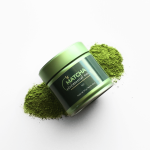
You drink your matcha straight, with water. You need a first-harvest ceremonial, soft and umami-rich, because nothing will mask its flaws. That's the territory of our Ceremonial No.3 Grand Cru: a single-cultivar Okumidori from Uji, first harvest, whisked with a chasen and drunk as is. It also makes a delicate latte if you go easy on the milk.
You mostly drink lattes. Milk softens and coats: an overly delicate ceremonial disappears in it. You need a profile built to stay present under milk, like our Barista No.1: Yabukita and Okumidori cultivars from Uji, 100 g format, about 50 lattes. It's a latte matcha, and we say so plainly: we won't recommend it for drinking straight.
You don't know yet, or you want both. The Discovery Pack brings the two profiles together, about 100 cups in total, to find your side in real conditions. And if you're starting from zero on tools, our matcha kits add the preparation essentials.
In every case, preparation matters as much as the powder: water at 75-80 °C, sifting, a W-motion whisk. Our guide on how to make matcha walks through it step by step.
Best matcha in Canada: where it hides, what it costs
In Canada, matcha is found in four places, and they're not equal. The grocery store works in a pinch for cooking, but origin is rarely specified. Asian grocery stores carry interesting import brands, mostly culinary, with variable rotation. Specialty cafés serve excellent lattes but rarely sell their powder retail. The online specialty shop remains the place where information is most complete and the powder freshest, because stock rotates and the seller's reputation depends on it. We detailed the full comparison in our guide on where to buy matcha in Canada.
Price-wise, here are realistic 2026 ranges for a quality powder, based on what actually sells here.
| Type of powder | Typical price | Keep in mind |
|---|---|---|
| Decent culinary | $15 to $30 per 100 g | For cooking; origin often vague, keep it for recipes |
| First-harvest ceremonial | $40 to $60 per 50 g | The grade for drinking straight; region and harvest must be named |
| Quality latte matcha | $40 to $70 per 100 g | Bold profile built for milk; around $1 per homemade latte |
| "Ceremonial" under $20 per 50 g | Be suspicious | At that price, the word ceremonial is almost always misused |
The useful reflex: bring everything back to the price per cup. A ceremonial at $54.90 per 50 g gives about 50 cups, so roughly $1.10 a cup; a homemade Barista latte comes to about $1. Next to the $6 to $8 of the café down the street, a well-chosen "best matcha" is also the most affordable of daily luxuries.
Five signs a matcha isn't worth its price
To finish equipping you, here are the red flags we see most often, in grocery stores and online alike.
1. No precise origin. "Japanese green tea" or worse, no country at all: the first criterion is missing, and the others rarely follow.
2. A dull colour. Olive green, khaki, yellowish: the photo (or the powder, if you can see it) announces the bitterness before the first sip.
3. "Premium" with no details. A superlative in place of a harvest, a region and a cultivar is a smokescreen.
4. A price too good to be true. A "ceremonial" at $15 per 50 g cannot cover the cost of a shaded, stone-ground first harvest. Someone pays the difference: your palate.
5. A large non-resealable format. Matcha oxidizes quickly once opened. A 250 g clear bag will go stale long before you finish it, whatever its starting quality. On that note, our guide on how to store matcha helps you protect your investment.
So, what is the best matcha? Our honest answer
The best matcha is the one that checks all five criteria and matches your cup. We can't judge powders we haven't tasted, but we can show you ours with all the cards on the table: region, harvest, cultivar, price per cup. If they're not for you, the 14-day guarantee applies, no questions asked.
Bian Matcha, Québec
Two powders, zero mystery: region, harvest and cultivar on display.
First-harvest Uji matcha, selected and shipped from Quebec. Free shipping from $80, 14-day money-back guarantee.
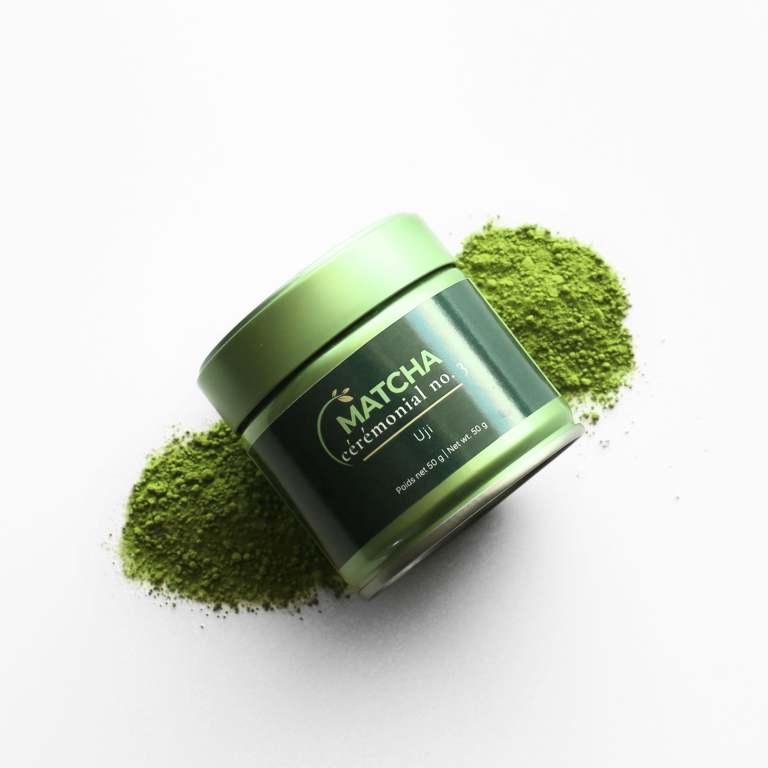
Okumidori from Uji, first harvest, soft and umami-rich. Drinks beautifully as is, and makes a delicate latte.
54,90 $ View Ceremonial No.3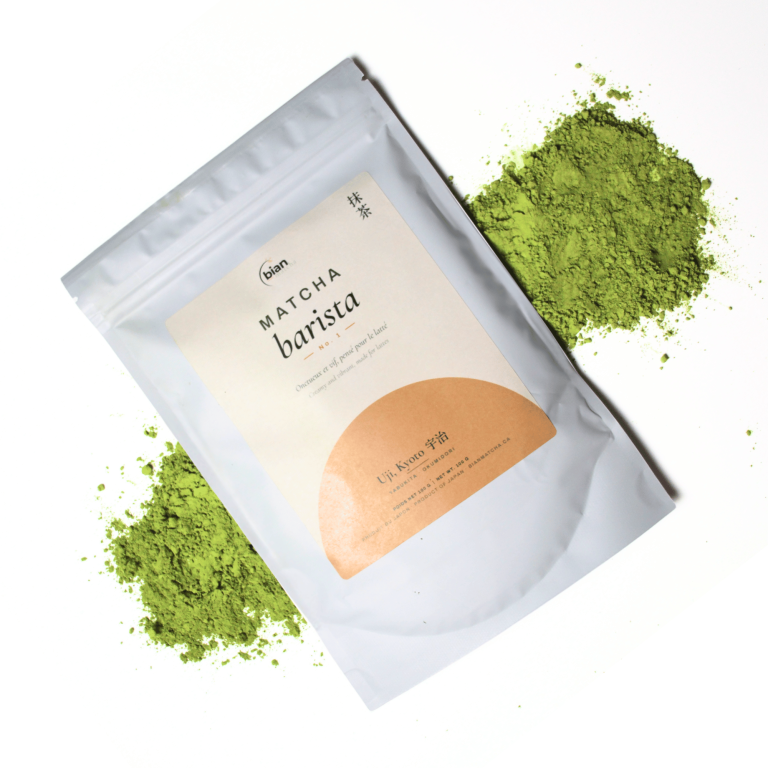
Bold profile built for milk, 100 g format, about 50 lattes. Your morning latte for about $1.
52,90 $ View Barista No.1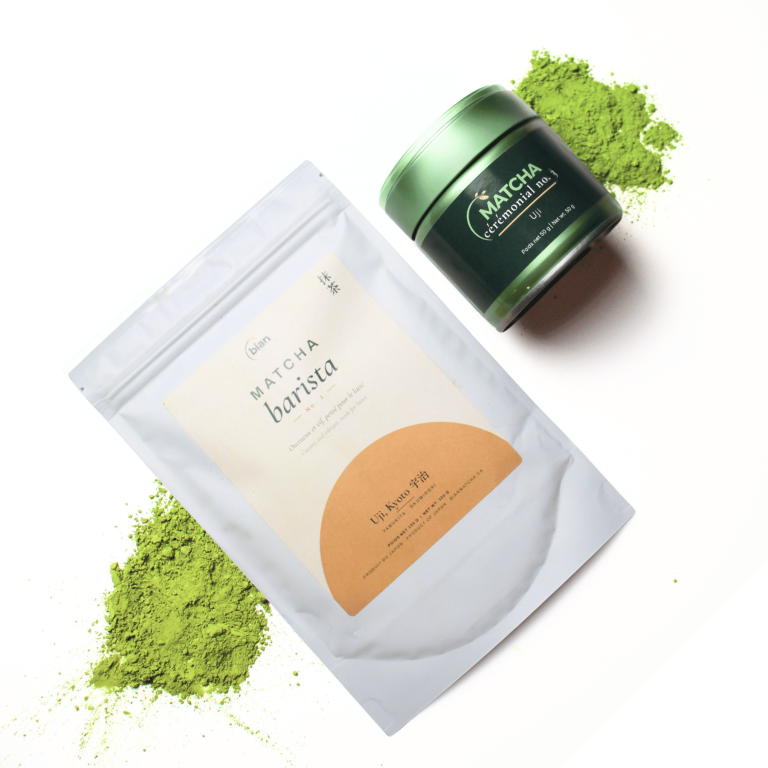
Ceremonial No.3 and Barista No.1 together: about 100 cups to find your best matcha.
98,90 $ View the Discovery PackFAQ, finding the best matcha
What is the best matcha?+
The one that displays a named Japanese region (Uji, Nishio, Yame), a first harvest, an identified cultivar, a vivid jade-green colour and a recent date, and that matches how you drink it: a soft ceremonial for drinking straight, a bolder profile for lattes. "Best" is a set of criteria, not a brand.
How do you recognize quality matcha?+
On the package: region, harvest, cultivar and freshness stated. In the bowl: a vivid jade-green colour, a fresh vegetal aroma, a fine foam when whisked and an umami sweetness without harsh bitterness. If the label says nothing about origin and harvest, the contents almost always disappoint.
What is the best matcha brand?+
Judge transparency rather than the logo: a serious brand documents region, harvest and cultivar, keeps a short and coherent range, and stands behind its powder with a guarantee. Any brand that checks those boxes deserves your trust; a brand that dodges them doesn't, whatever its fame.
What is the best matcha for lattes?+
A matcha with a bold profile, built to stay present under milk: that's exactly the role of a barista-style matcha. A very delicate ceremonial, perfect with water, often disappears in a latte. At Bian Matcha, that's the Barista No.1 (Yabukita and Okumidori from Uji, 100 g, about 50 lattes).
Is the most expensive matcha the best?+
No. A high price is necessary (a shaded, stone-ground first harvest is expensive to produce) but not sufficient: some expensive matchas stay anonymous about origin and harvest. Check the criteria first, then bring the price back to the cup: around $1 for a good ceremonial.
What colour should good matcha be?+
Vivid jade green, almost electric. It's the sign of a young leaf, shaded before harvest and freshly ground. Olive, khaki or yellowish green points to a late harvest, an aged leaf or an oxidized powder, and announces bitterness.
Where can you find the best matcha in Canada?+
From an online specialist, where the information (region, harvest, cultivar) is complete and stock rotation is fast. Grocery and general stores work for culinary grade. Bian Matcha selects its Uji powders and ships them across Canada from Quebec, free from $80.
Is organic matcha better?+
Organic certification speaks to how the tea was grown, not to taste or grade. A late-harvest organic matcha will still be bitter, and an excellent ceremonial isn't always certified. For quality in the cup, rely on origin, harvest, cultivar and colour; organic is a plus, not a taste criterion.