

How to Recognize Good Matcha: 5 Signs That Don't Lie
Color, texture, origin, harvest and taste: the five signs of quality matcha, and the red flags that give away a mediocre powder.
To recognize good matcha, look at five things: the color (a bright jade green), the texture (a nearly impalpable powder), the origin (Japanese and stated), the harvest (the first of spring) and the taste (umami and smooth, never bitter). No claim on the packaging replaces these criteria, because labels like "ceremonial" are not regulated. Here is how to read each of these signs, before and after you buy.
1. Color: a bright jade green
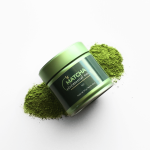
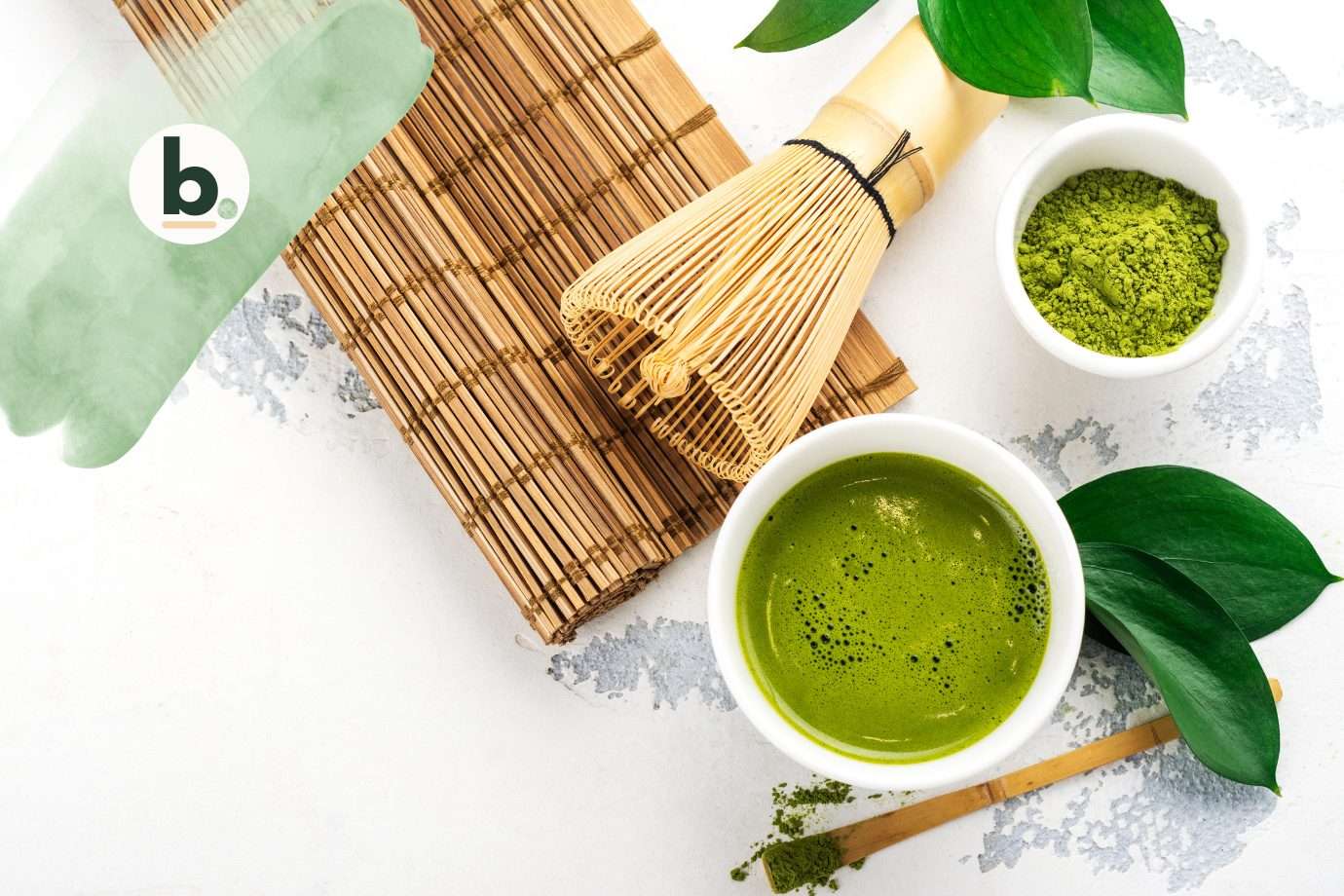
This is the fastest and most reliable test. A good matcha is an intense green, almost fluorescent, leaning toward jade. That color comes from chlorophyll, and chlorophyll comes from shading: three to four weeks under cover before the harvest push the leaf to produce more of it. The more vivid the green, the better the shading and the freshness.
Conversely, a dull, yellowish or khaki-toned matcha tells you one of two things: leaves that were too mature (a lower grade), or a powder oxidized by time and air. Either way, walk on by.
2. Texture: fine to the point of being impalpable
Real matcha is ground slowly on a stone mill, down to particles a few microns across. The powder is so fine it seems to vanish between your fingers and clings slightly to the pouch. If you feel grit, sand under your fingers, that's the sign of fast industrial grinding: the mouthfeel will be rough and the lumps many.
3. Origin: Japanese, and stated
Japan remains the benchmark for matcha, with three major regions: Uji (Kyoto), the historic home of the high end, Nishio (Aichi) and Yame (Fukuoka). A quality matcha states its origin, sometimes down to the cultivar (Okumidori, for example). A vague label ("Asian origin", country left unsaid) almost always hides a cheap leaf. Chinese or Korean matchas aren't bad on principle, but they generally offer neither the same terroir nor the same mastery of shading.
4. Harvest: the first of spring
The best powders come from the first harvest (ichibancha), that of the youngest April-May leaves. They are sweeter, richer in L-theanine (the umami amino acid) and lower in bitter catechins. Later harvests yield tougher leaves, perfect for a culinary grade, but more astringent to drink pure. A serious brand states "first harvest"; its absence is rarely an accident.
5. Taste and aroma: umami, never bitter
On opening the pouch, a good matcha smells of fresh grass, sometimes sweet seaweed or the seaside: that's the shade aroma. In the mouth, well prepared (water at 70-80 °C / 160-175 °F), it's round, smooth, slightly sweet, with that lingering umami length. Sharp bitterness, drying astringency, a flat taste: all signs of a lower-quality matcha or a poor preparation. If you get bitterness from a supposedly ceremonial powder, check your water temperature before blaming the tea.
Before buying, you can already check 3 of 5 criteria
- The color in the photo or in store: bright jade green.
- The origin on the listing: a named Japanese region.
- The harvest in the description: "first harvest".
Texture and taste, in turn, confirm themselves on the first cup.
The price trap
A real first-harvest matcha, shade-grown and stone-ground, takes time and rare know-how. So it's never dirt cheap. A "ceremonial" sold at a slashed price is almost always a lower grade in disguise. That doesn't mean the most expensive is best, but an abnormally low price is, on its own, a reliable signal of lesser quality.
What about the claims on the packaging?
"Ceremonial grade", "premium", "superior quality": none of these words are governed by any official standard in Japan. They guide, but they prove nothing. That's why the five criteria above matter more than any label. We explain what each term means (and doesn't mean) in matcha grades.
Bian Matcha, Quebec
All five criteria, in a single bowl.
Jade green, fine grind, Uji origin, first harvest, umami without bitterness: our Ceremonial No.3 was chosen to tick every box.
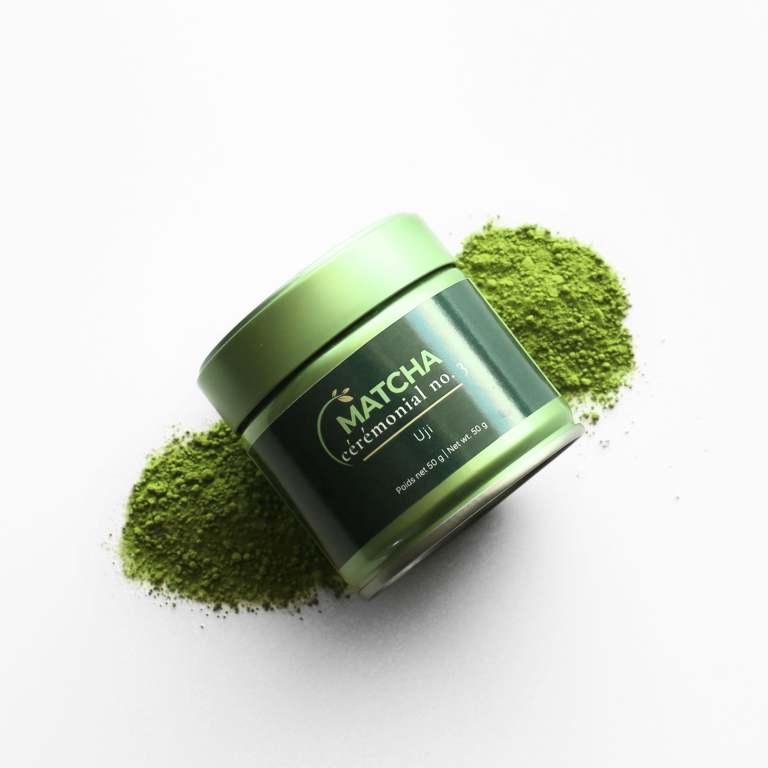
Single-cultivar Okumidori from Uji, first harvest. Vivid color, fine texture, umami softness: the matcha you drink pure.
$54.90 See the Ceremonial No.3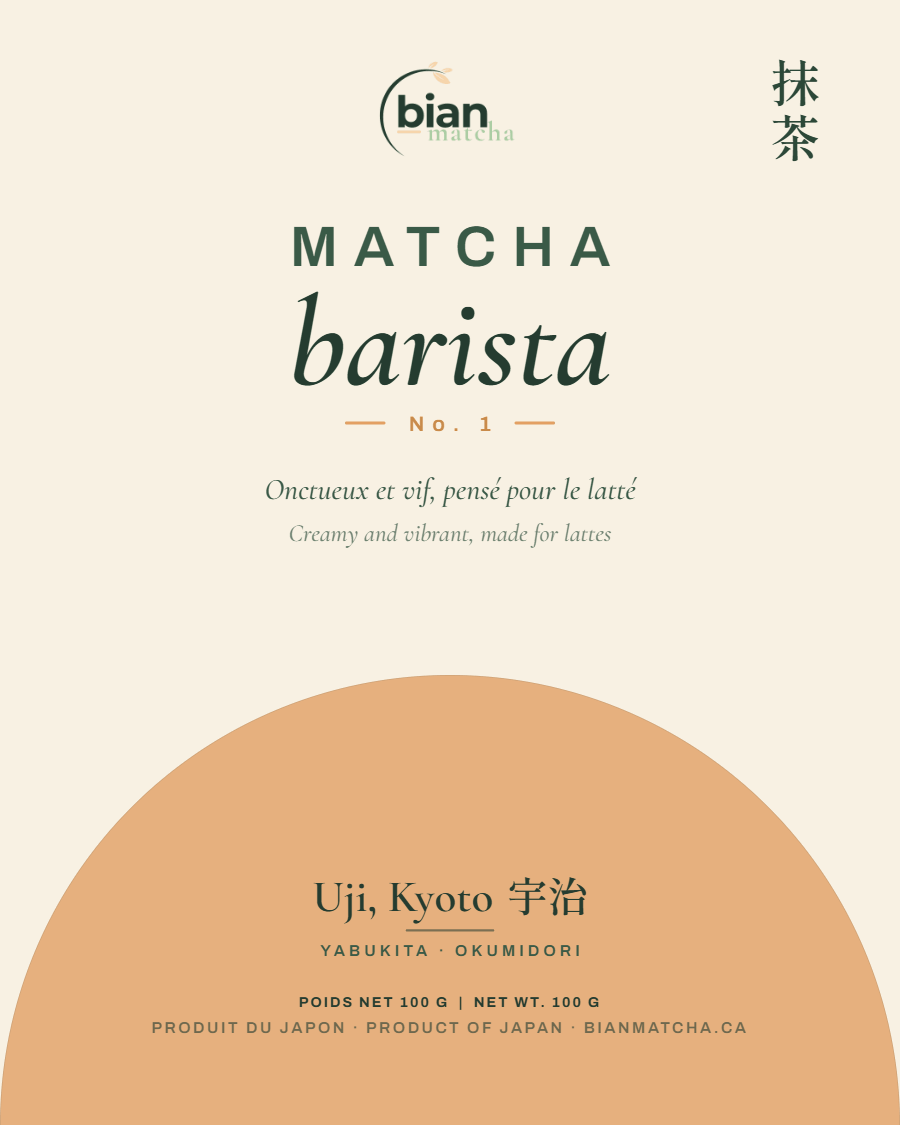
From Uji, first harvest too, but a dense profile built to carry through milk without getting lost.
$69.90 See the Barista No.1FAQ, recognizing good matcha
How do I know if a matcha is good quality?+
Check five criteria: a bright jade-green color, a very fine texture, a stated Japanese origin, the mention "first harvest" and an umami taste without bitterness. Three of these signs can be checked before buying: color, origin, harvest.
What does the color of matcha mean?+
A bright, vivid green indicates a high chlorophyll content, so good shading and young, fresh leaves. A dull, yellow or khaki color gives away more mature leaves or a powder oxidized by time.
Is cheap matcha necessarily bad?+
Not always, but an abnormally low price for a "ceremonial" is a reliable signal of lesser quality: more mature leaves, a late harvest or an old powder. The most expensive isn't always best, but the very cheap is rarely good.
Is Japanese matcha better than Chinese?+
Generally yes, for high-end matcha. Japan has centuries of mastery in shading and grinding, concentrated in regions like Uji, Nishio and Yame. Matcha from elsewhere isn't bad on principle, but rarely offers the same umami profile.
My matcha is bitter, is it poor quality?+
Not necessarily. Bitterness often comes from water that's too hot (above 80 °C / 175 °F) or too generous a dose. Try again with water at 70-80 °C and 1 g of powder. If the bitterness persists, the powder's quality is likely the cause.
With these criteria in mind, the rest follows: understand matcha grades, see why Japanese origin changes everything, and return to the ceremonial matcha guide for the big picture.