

Bian Matcha - Recipes
How to Make Matcha: The Traditional Way (Usucha)
Making traditional matcha is simpler than it looks: a bowl, a whisk, water at the right temperature and 30 seconds of technique. You do not need a full tea ceremony to create a real moment of calm.
The most common style in Japan is called usucha, "thin tea": matcha whisked into a little hot water, drunk straight, no milk, no sugar. It is the most direct way to taste a great matcha. And it is exactly what the Ceremonial No.3 Grand Cru was made for: a single-cultivar Okumidori from Uji, sweet and umami-rich, meant to be enjoyed as is.
Recipe card
Ingredients
- 1 g (1/2 tsp) Bian Matcha Ceremonial No.3 Grand Cru (1 heaping chashaku scoop)
- 70 ml Hot water at 75 °C (never boiling)
That is it. Two ingredients. At this level of simplicity, the grade of your matcha is 100 % of the result: this is the recipe where reaching for your best tea truly pays off.
Recommended tools
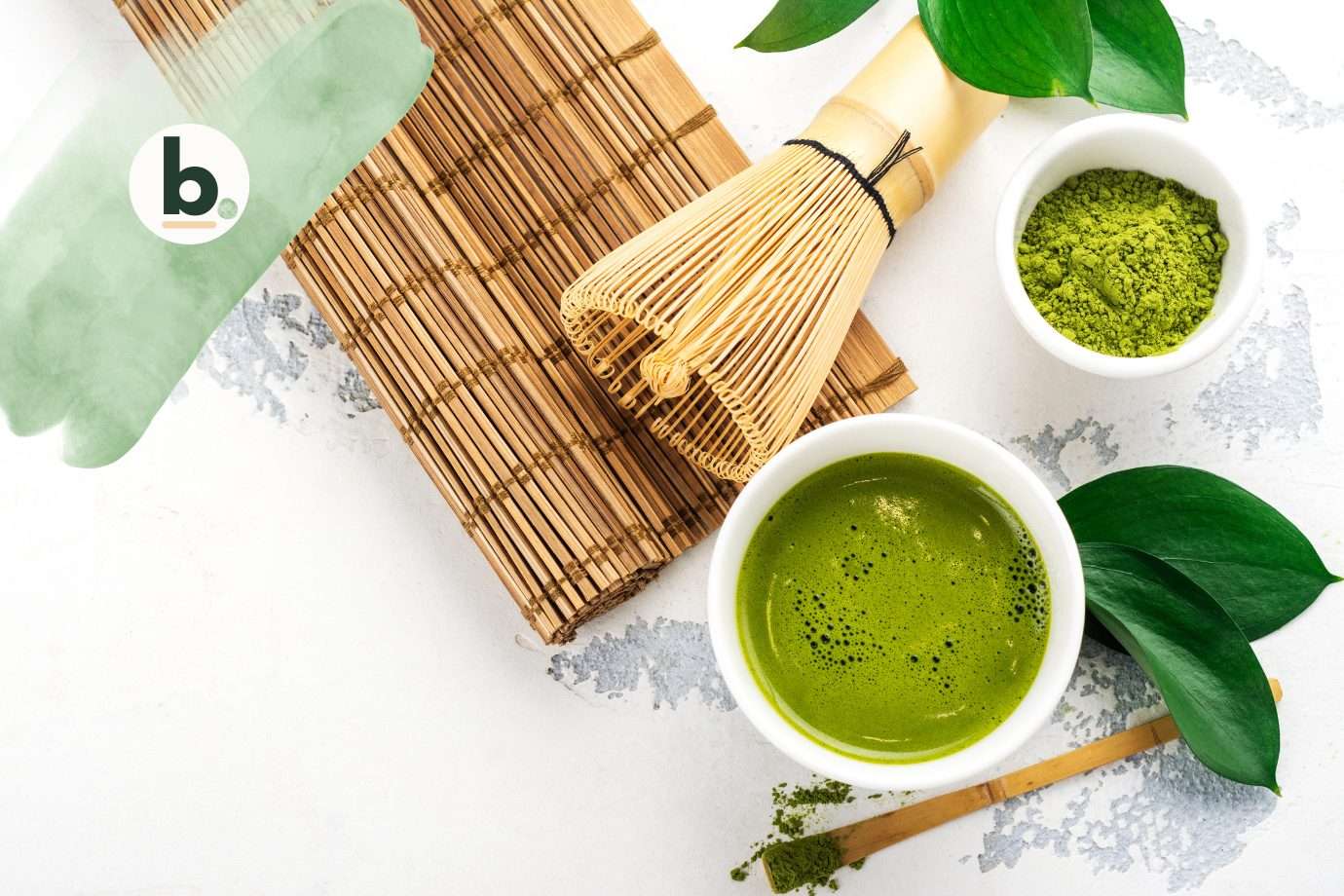
Usucha is first and foremost about the tools. Here are the essentials:
🎋Step-by-step method
- 1Warm your bowlPour a little hot water into the bowl and soak the tines of your chasen for 30 seconds to soften them. Empty the bowl and wipe it dry.
- 2Sift the matchaSift 1 g of Ceremonial No.3 through a small sieve into the bowl. Optional, but it is the secret to a perfectly smooth texture.
- 3Pour the 75 °C water70 ml, no more. Let boiled water rest for 2 minutes before pouring: too hot, it scorches the tea.
- 4Whisk in a W motionHold the bowl with one hand, whisk from the wrist drawing fast W shapes for 15 to 20 seconds, without scraping the bottom.
- 5Polish the foamWhen a fine foam appears, slow down and lift the whisk slightly at the surface to smooth out the larger bubbles.
- 6Drink right awayHold the bowl with both hands and drink while the foam is at its peak. A good usucha is enjoyed in three or four sips.
The motion comes from the wrist, not the arm. If your matcha will not foam, whisk faster and closer to the surface: it is the incorporated air that builds the foam, not force.
Variations and ideas
Once usucha feels natural, a whole world opens up:
🍵 Koicha (thick tea)
Twice the matcha, half the water, kneaded slowly into a glossy paste. Reserved for the sweetest grades, to try once usucha holds no secrets for you.
🧊 Iced usucha
Whisk the matcha in 30 ml of 75 °C water, then pour over ice and top up with fresh water. The same tea, summer edition.
🥤 No whisk
The mini shaker stands in for the chasen: 1 g of matcha, 70 ml of lukewarm water, 15 seconds of shaking. Less ceremonial, just as good.
🌿 Delicate latte
No.3 also softens beautifully: add 100 ml of frothed hot milk to your usucha for an ultra-fine latte.
Frequently asked questions
What is the difference between usucha and koicha?
Usucha ("thin tea") is whisked vigorously with about 1 g of matcha for 70 ml of water: light and foamy. Koicha ("thick tea") is kneaded gently with double the matcha and half the water: dense, syrupy, reserved for top grades.
Why won't my matcha foam?
Three classic causes: whisking too slowly (you want fast W strokes, from the wrist), whisking too deep (foam builds at the surface), or a culinary-grade matcha, which naturally foams less than a first-harvest ceremonial.
What water temperature for matcha?
Between 70 and 80 °C, ideally 75 °C. Boiling water burns the tea's amino acids, including the L-theanine that gives matcha its sweetness, and brings out bitterness. Boiled water + 2 minutes of rest = perfect.
Do I really need a matcha bowl (chawan)?
No. Any wide-bottomed kitchen bowl works to start: what matters is having room to whisk in a W. The Complete Matcha Set gathers the traditional equipment when you are ready to settle in.
Which matcha is best for drinking straight?
A first-harvest ceremonial, sweet and bitterness-free: with no milk or sugar, there is nothing to hide flaws. The Ceremonial No.3 Grand Cru is our grade made for this. To compare grades, here is our guide to choosing your matcha.
Is straight matcha bitter?
A good ceremonial prepared at 75 °C is not bitter: you taste an enveloping umami, a soft vegetal sweetness and an almost sugary finish. If your matcha tastes bitter, blame water that is too hot or the grade.
Enjoyed this ritual? Share it!
Share on Facebook