

How to Make Matcha Without a Whisk: Shaker, Frother, Jar, What Actually Works
No chasen at home? Here are the methods that make smooth, lump-free matcha, what each one really gives you, and how to choose between a bamboo whisk and a shaker depending on how you drink your matcha.
Quick answer
The easiest way to make matcha without a whisk is to shake it: 2 g of matcha and 20 ml (4 tsp) of hot water at 70-80 °C (160-175 °F) in a sealed shaker, about 10 seconds, then the milk. No lumps, ready in 30 seconds. For lattes, my pair: the Mini Shaker and Barista No.1 (about $1.06 of matcha per cup).
 Your latte at homeThe matcha made for lattesBarista No.1, the best-selling matcha in the shop, from Uji. In a 50 g or 100 g pouch, about 25 or 50 lattes.from $34.90 · See Barista No.1 →
No chasen in your kitchen? That doesn't stop you from making good matcha. Here I compare the methods you already have on hand, what each one really gives you, and I tell you which one to keep depending on whether you drink your matcha with milk or straight.
Which methods work to make matcha without a whisk?
Any method that moves the powder hard in a small splash of hot water works: the shaker first, then a sealed jar and a milk frother. A spoon on its own almost always leaves lumps. The secret isn't the tool, it's the order: dissolve the powder in a little water first, then top it up.
Matcha doesn't dissolve like instant coffee: it's ground tea leaf, suspended in water. If the powder hits a large amount of liquid straight away, it forms little dry balls in the middle. A bamboo whisk solves that by stirring a small amount of water very fast. Without one, you need to recreate that same motion with something else.
| Method | What you get | Best for |
|---|---|---|
| Mini Shaker | Smooth, lump-free, light foam, in 30 seconds | Hot or iced lattes, office, travel |
| Sealed jar or Mason jar | Smooth if the powder is sifted, coarser foam | In a pinch, iced matcha with water |
| Electric milk frother | Decent, a few bigger bubbles, possible splashes | Hot lattes if you already own one |
| Blender | Smooth, but a lot of dishes for one cup | Smoothies or several servings |
| Fork or spoon | Frequent lumps, no foam | Truly a last resort |
| Chasen (the reference) | Fine, tight foam, in 20 to 30 seconds | Straight matcha in a bowl |
How do you make matcha in a shaker?
In a shaker, you add 2 g of matcha and 20 ml of hot water at 70-80 °C, close it, shake for about 10 seconds, then pour this small concentrate into the milk. It's the fastest and most consistent method I know for a latte.
- Add 1 tsp of matcha (2 g) to the Mini Shaker ($34.90).
- Pour in 20 ml (4 tsp) of hot water at 70-80 °C (160-175 °F), never boiling, up to the line.
- Close the lid and shake for 10 to 15 seconds: the fins at the bottom break up the powder as you shake.
- For a hot latte, pour the concentrate into about 200 ml of hot milk. For an iced one, pour it over a tall glass of ice and 150 to 200 ml of cold milk.
No sifter, no bowl, no sink: the shaker holds 50 ml, it's leak-proof and slips into a bag. For a version with water, top the concentrate up with about 180 ml of water instead of milk.

If you mostly make lattes, I suggest the Barista No.1 with the Mini Shaker: that's exactly the pair in the Matcha Latte Kit, or the Barista on its own as a subscription if you already have your shaker.

Or the Matcha Latte Kit: Barista No.1 and the Mini Shaker at a bundle price $83.90free shipping
Drinking it daily? Also on subscription: $50.25 delivered
$10 shipping, free from $80 · ships within Canada
14-day money-back guarantee on the matcha
Can you make matcha with a milk frother?
Yes, an electric milk frother makes matcha without a whisk, as long as you dissolve the powder in a small splash of hot water before adding the milk. The texture is decent, with slightly bigger bubbles than with a chasen.
- Use a tall mug rather than a wide bowl: it limits splashes.
- Sift the matcha if you can, then add about 20 ml of water at 70-80 °C.
- Push the frother head all the way to the bottom before switching it on, then slowly lift it. Tilt the mug if the whisk doesn't reach the bottom well.
- Then add the hot milk, which you can also froth separately.
If you already own a frother, it's a good option. If you have to buy a tool, the shaker is simpler: nothing to charge, and it works for iced drinks too.
Jar, blender or fork: do they work?
A sealed jar works almost as well as a shaker, a blender works for several servings or a smoothie, and a fork only works if you first make a paste with a few drops of water.
A jar or a Mason jar
Same idea as the shaker: a closed container you shake hard. The tip a tea sommelier gave Tasting Table: water first, powder second, and shake until no lumps remain, without stirring. Keep the amount of hot water small, screw the lid on tight and hold the jar with a towel. A jar that's too big for the amount of water foams less.
A blender
It dissolves the powder very well, but pulling out the blender for a single cup is a lot of dishes. It makes sense for a matcha smoothie or several lattes at once.
A fork or a spoon
Sift the powder into the mug, add two or three teaspoons of hot water and press it into a smooth paste against the side. Once the paste has no lumps, top it up little by little. It works in a pinch, but you won't get any foam.
Matcha shaker vs whisk: which one should you choose?
For straight matcha in a bowl, keep the chasen: it's what gives the fine, soft foam. For an everyday latte, hot or iced, go with the shaker: it's faster, needs no bowl or sifter, and rinses clean in one go.
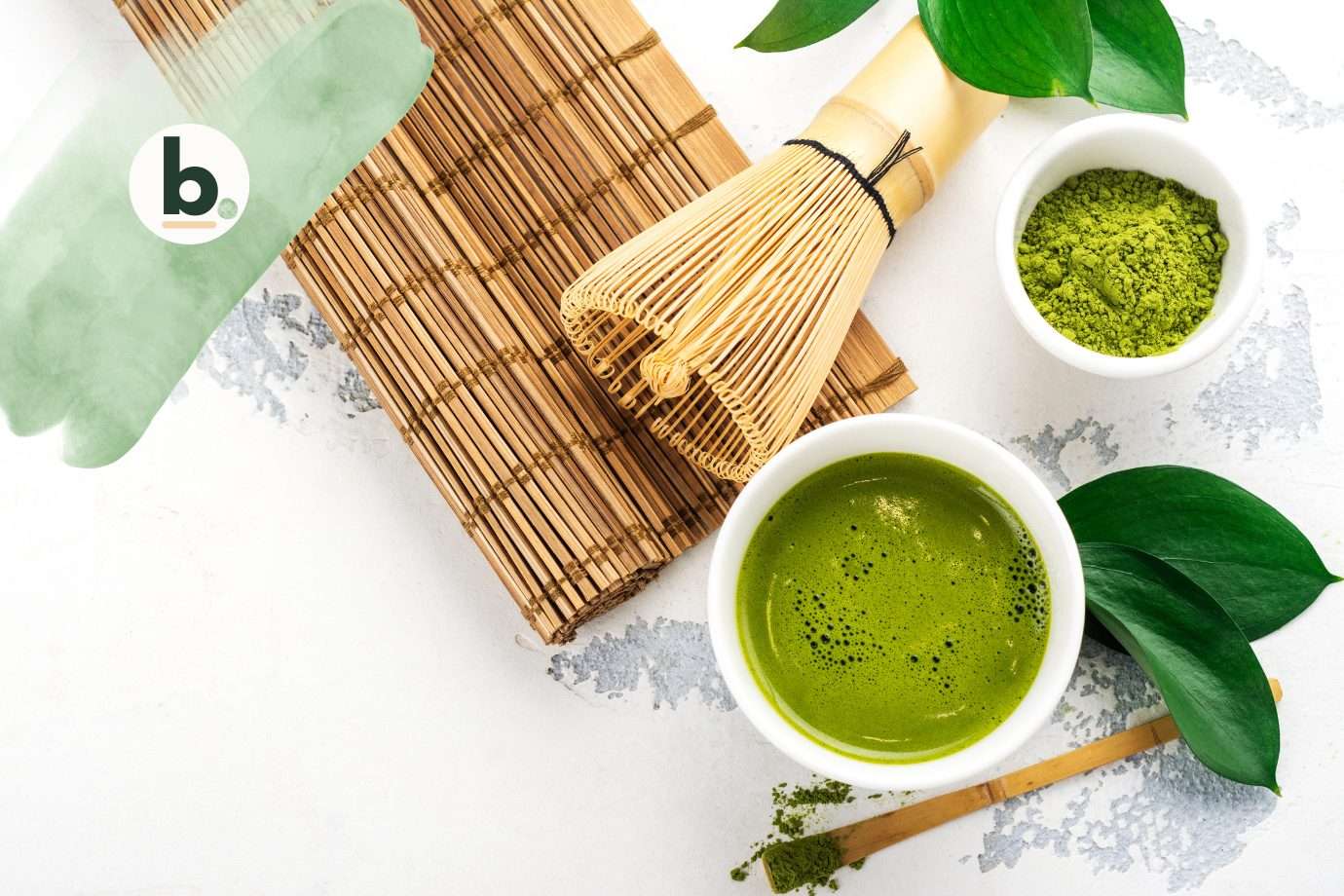
A chasen is a whisk carved by hand from bamboo. In Japan, the ones from Takayama, in Nara Prefecture, have been a designated traditional craft since 1975, with 60 to 240 prongs depending on the style. Those many fine prongs are what make the tight foam of an usucha. The Ippodo tea house whisks 2 g of matcha into 60 ml of hot water, vigorously, for 15 seconds. To choose, use and care for one, I wrote a separate guide: the chasen, the matcha whisk.
| Chasen Bamboo Whisk | Mini Shaker | |
|---|---|---|
| Made for | Straight matcha in a bowl (usucha) | Hot or iced lattes, matcha with water |
| Dose | 1 tsp of matcha, 60 ml of water at 70-80 °C | 2 g of matcha, 20 ml of water at 70-80 °C, then the milk |
| Time | 20 to 30 seconds of W-shaped whisking | About 10 seconds of shaking |
| Foam | Fine and tight | Light, lump-free |
| Care | Rinsed in warm water, no soap, air-dried; lasts 6 to 12 months | Hand-washed in soapy water, not dishwasher safe |
| Price | $15.90 | $34.90 |
Ceremonial No.1: drink it straight first, whisked with water; it's also great in a latte. That's where the Chasen Bamboo Whisk really shines: the full bowl method is in my recipe on how to make matcha in a bowl.

The mistakes that cause lumps without a whisk
Almost all lumps come from powder poured straight into a lot of liquid. The other mistakes are water that's too hot, too much powder at once, and matcha left to sit before you drink it.
- Powder into the milk. It floats and forms dry balls. Always dissolve it first in 20 ml of water.
- Boiling water. It makes matcha bitter. Aim for 70 to 80 °C: my no-thermometer tricks are in my guide on matcha water temperature.
- Stirring with a spoon. Stirring doesn't break lumps: you need to shake, whisk or press it into a paste.
- No sifting with a gentle method. With a finned shaker, you don't need it. With a jar, a fork or a frother, a fine strainer changes everything.
- Waiting. Matcha settles at the bottom. If it has been sitting, shake or stir before drinking.
To put this into practice, my hot matcha latte recipe and my iced matcha latte recipe are both made in a shaker. And if you drink it without milk, my guide to matcha without milk covers the right water and the right dose.
Which matcha should you pick when you don't have a whisk?
Without a whisk, you mostly make lattes: that's where Barista No.1 belongs, an Uji matcha built for milk, which keeps its flavour under oat foam as well as over ice. The 100 g pouch makes about 50 lattes, the 50 g pouch about 25.
If you want to drink it straight, even shaken, choose a ceremonial grade matcha: without milk, quality shows right away. To compare the two, my guide to the best matcha for lattes covers it, and my guide to choosing your matcha points you to the right grade. And for tools, my matcha kit guide compares what you really need to get started.

In the same series
- Before: best matcha for lattes
- Next: the hot matcha latte recipe
- In a bowl, with a whisk: how to make matcha in a bowl
- The matcha that goes with it: Barista No.1
Frequently asked questions: matcha without a whisk
How do you make matcha without a bamboo whisk?
Put 2 g of matcha and 20 ml of hot water at 70-80 °C in a shaker or a small sealed jar, and shake for about 10 seconds. You get a smooth, lump-free concentrate that you then pour into your hot or cold milk. An electric milk frother works too, as long as you dissolve the powder in a small splash of water first.
Can you make a matcha latte without a whisk?
Yes, and that's actually where a shaker is most practical. Shake 2 g of matcha with 20 ml of hot water, then pour it into about 200 ml of hot milk, or over ice and cold milk for an iced latte. No bowl or sifter needed, and the taste is the same as with a whisk.
Does a shaker really replace a chasen?
For lattes, yes: the shaker dissolves the powder faster and without lumps. For straight matcha in a bowl, no: the chasen gives a finer, softer foam, which is part of the pleasure of an usucha. You can easily keep both: the shaker for rushed mornings, the chasen for a weekend bowl.
Can you use a metal kitchen whisk?
A small sauce whisk works better than a spoon, especially if you first make a paste with a little water. Its wires are thicker and fewer than the prongs of a chasen: the powder mixes in, but the foam stays coarse. For a latte, that's fine; for straight matcha, you'll taste the difference.
How do you avoid lumps without a sifter?
Use a shaker with fins: they break up the powder as you shake, so you no longer need a sifter. Without a shaker, press the powder into a paste with a few drops of hot water before topping it up, and never pour the powder straight into the milk. A small kitchen strainer also works as a sifter.
How long should you shake matcha?
In the Mini Shaker, about 10 seconds is enough, 15 at most: with 20 ml of hot water and fins at the bottom, the powder dissolves very quickly. In a jar without fins, give it a little longer and check that no dry specks remain before adding the milk.
How do you clean a shaker or a chasen?
The shaker is hand-washed in soapy water, not in the dishwasher or microwave, and never with boiling water. The chasen is only rinsed in warm water, without soap, because bamboo holds on to flavours, then air-dried. Well cared for, a chasen lasts 6 to 12 months.
How much caffeine is in a matcha?
On average, 2 g of matcha contains about 65 mg of caffeine, with most matcha analyzed falling between 30 and 90 mg (Standard Tables of Food Composition in Japan, 2020, and published studies): the details are in my guide to matcha caffeine.
Sources
- Basic Usucha (Matcha), Ippodo Tea, accessed October 14, 2026.
- Takayama Chasen (Tea Whisks), Traditional Craft Industries Promotion Association, accessed October 14, 2026.
- Making Matcha Without A Bamboo Whisk Is Easy With This Simple Hack, Tasting Table, September 11, 2025, accessed October 14, 2026.
Guide by Greg, Bian Matcha's dad. Questions? Write to me.