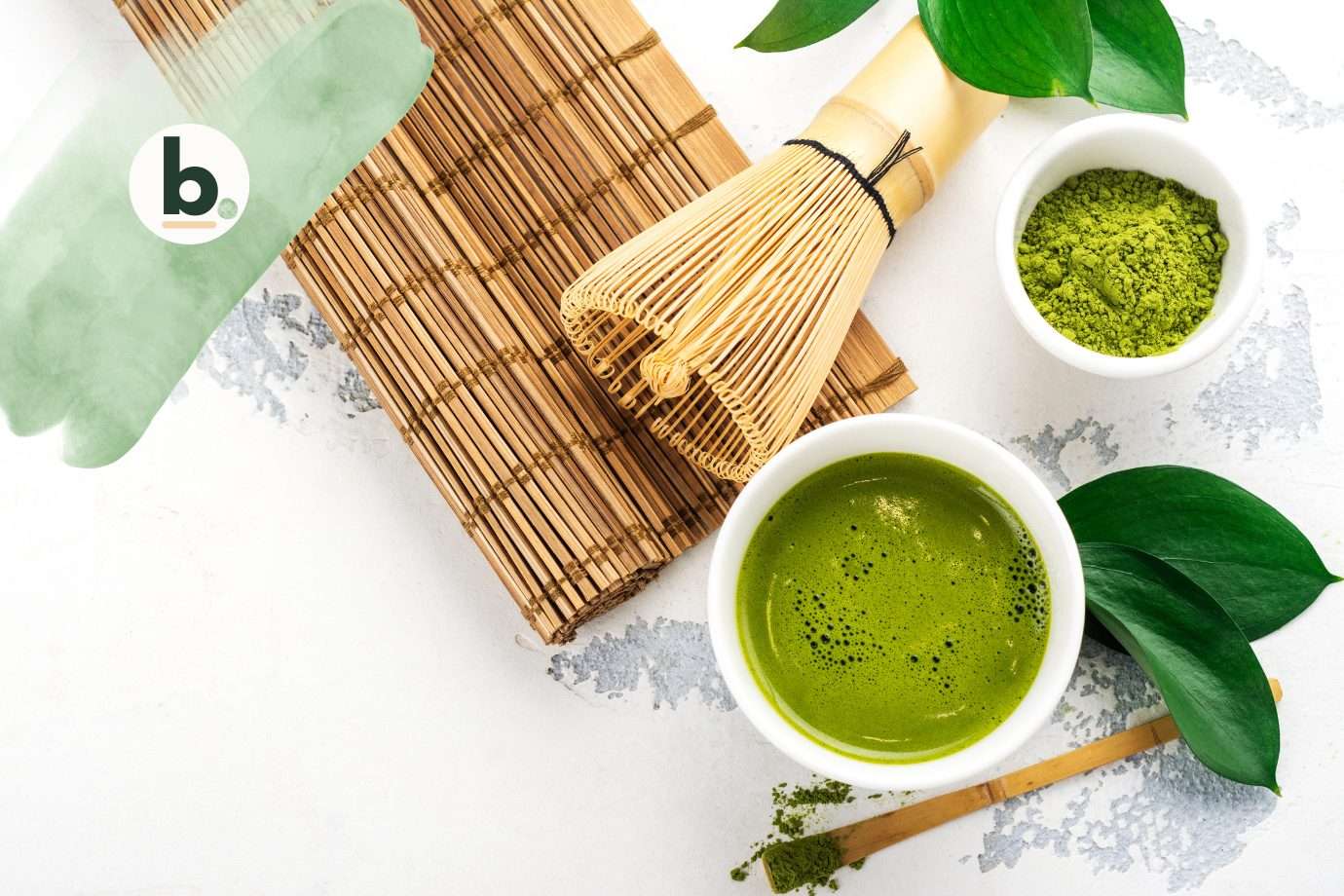


What Does Matcha Taste Like? The Real Taste of Good Matcha, and Why Yours Tastes Like Grass, Fish or Bitter
Umami, sweetness, a hint of the sea, a touch of bitterness: what good matcha tastes like, where those flavours come from, what milk changes in a latte, and what to do when yours tastes like cut grass, fish or bitter.
Quick answer
Matcha tastes vegetal and smooth: a round umami, close to a light broth, an aroma of seaweed and the sea, a little bitterness and a slightly sweet finish. If it tastes mostly bitter, like cut grass or like fish, the cause is usually the quality of the powder, its freshness or water above 80 °C. In a latte, milk rounds it all out.
 Your matcha at homeStraight first, also great in a latteCeremonial No.1 Grand Cru, single-cultivar Okumidori from Uji, first harvest: made to drink straight from the bowl, and lovely in a latte too.$57.90 · See Ceremonial No.1 →
It's the question everyone asks before buying a first pouch, and it's a fair one: matcha doesn't taste like bagged green tea, and it doesn't taste like coffee. Here I explain what good matcha tastes like, where that taste comes from, and how to fix a matcha that disappoints you, because most of the time, you're not the problem.
What does good matcha taste like?
Good matcha tastes of umami first, that round, savoury flavour you find in a broth, then a natural sweetness, with a light bitterness that stays in the background. Its aroma brings to mind the ocean or seaweed: for the Japanese tea house Ippodo, that sea note is even a sign of quality.
Break it down and you'll find four things in the cup:
- Umami. The full, almost salty-without-salt flavour that gives it body. It's what sets matcha apart from ordinary green tea.
- A green, marine note. A fresh green flavour that brings nori seaweed to mind more than a lawn.
- Sweetness. With no added sugar, a slightly sweet finish that lingers after each sip.
- A touch of bitterness. Normal and expected, as long as it stays discreet. In good matcha, it balances the sweetness instead of crushing it.
Texture matters too: whisked, matcha makes a fine foam that makes each sip softer and creamier. If you mostly drink it as a latte, it's a different, rounder taste, which I explain below with my Barista No.1 ($52.90 for 100 g), the matcha I chose for milk.
To taste matcha as it really is, straight in a bowl, I suggest starting with my Ceremonial No.1 Grand Cru: it shows the umami and sweetness best, and it also makes a delicate latte.

$10 shipping, free from $80 · ships within Canada
14-day money-back guarantee on the matcha
Where does matcha's taste come from?
Matcha's taste comes mostly from shading. A few weeks before harvest, the tea plants are covered: deprived of sun, the leaf keeps its amino acids, including L-theanine, which give umami, and makes fewer catechins, which give bitterness and astringency. In full sun, on the other hand, part of the theanine is turned into catechins.
That's what a 2026 review by Japanese researchers sums up: shading gives a tea rich in amino acids and low in catechins, with a pronounced umami and very little bitterness. The same authors note that drying the tencha leaves at high temperature gives matcha its sweet, lightly roasted aroma. The whole journey, from shading to the stone mill, is in my guide on how matcha is made.
The sea note comes from a small group of aroma compounds, including dimethyl sulfide and a few pyrazines. Dimethyl sulfide has one weakness: it's unstable and oxidizes easily. Keep that in mind, because it explains why poorly stored matcha loses its freshness so quickly.
| What's in the leaf | What you taste | What raises it |
|---|---|---|
| L-theanine and other amino acids | Umami, roundness, sweetness | Shading, first spring harvest |
| Catechins (tea polyphenols) | Bitterness and astringency | Sun, later harvests |
| Caffeine | Bitterness | More of it ends up in the cup with very hot water |
| Dimethyl sulfide, pyrazines | Sea, seaweed note | Shading and tencha processing; oxidizes over time |
| Drying aromas | Sweet, lightly roasted note | Drying the tencha at high temperature |
What does a matcha latte taste like?
A matcha latte tastes like smooth, creamy green tea: milk softens the bitterness and wraps around the umami, leaving a green, slightly roasted flavour that lingers. It's often the best way in for someone who has never tried matcha.
For the taste not to disappear under the milk, you need a denser matcha. That's the job of the Barista No.1: its product page describes a deep umami, light toasted notes and a long finish in milk. The simplest method: 2 g of matcha and 20 ml of hot water (70 to 80 °C) in the Mini Shaker, shake, then add the milk, hot or cold. My hot matcha latte and iced matcha latte recipes start there, and my guide to the best matcha for lattes compares the options.
If your only memory of matcha comes from a coffee shop, the taste may surprise you: several chain drinks are sweetened or vanilla-flavoured. I look at what's in the ones from Tim Hortons and Starbucks in two separate guides.

Why does my matcha taste like grass, fish or bitter?
In the vast majority of cases, an unpleasant taste comes from three things: average-quality powder, powder that's no longer fresh, or a preparation that's too hot or too strong. The table helps you find the cause from what you taste.
| What you taste | Most likely cause | What you can do |
|---|---|---|
| Very bitter, harsh, drying | Water too hot, too much powder for the water, or a late-harvest matcha | Water at 70-80 °C, about 1 to 2 g for 60 to 70 ml, first-harvest matcha |
| Cut grass, hay, harsh green | Lower grade: grassy, harsh notes | Choose a shaded, first-harvest matcha with a precise origin |
| Fishy, too much sea | Unbalanced sea note, often in stale powder | Check freshness; in a latte, milk softens this note |
| Flat, earthy, dull colour | Old or oxidized powder | Sealed tin, away from light, in the fridge once opened |
| Smoky or burnt | Processing defect | Switch matcha |
| Bitter in spots, clumps | Powder not fully dissolved | Sift, whisk, or shake in the Mini Shaker |
If it tastes like fish
A little sea note is normal, and even a good sign: it's the signature of a shaded tea. But if it takes over, check the freshness of your powder first. Matcha's fresh aromas, like dimethyl sulfide, are fragile and oxidize: a tin that's been open for a long time, poorly closed or kept near a heat source loses them first, and the balance in the cup shifts. If the note bothers you even with fresh powder, try it in a latte, where milk softens it a lot.
If it tastes like cut grass
A Chinese study of matcha in three grades showed it clearly: the top grade smelled of seaweed, freshness and roasting, while the medium and low grades leaned toward grassy, fatty and over-fired notes. A cut-grass taste often means a lower-grade matcha, not that matcha is supposed to taste that way.
If it's too bitter
Start with the water: the hotter it is, the more caffeine and catechins it pulls into the cup. It's all explained in my guide on matcha water temperature: aim for 70 to 80 °C, never boiling. Then the dose: too much powder for too little water also concentrates the bitterness. If your matcha is still bitter after that, it's probably the powder itself: a late-harvest matcha, richer in catechins, is made for cooking, not for the bowl. And if it's your stomach rather than your palate that complains, my guide on how much matcha per day explains what to change.
How can you tell good matcha by taste?
Good matcha has a vivid green colour, a fresh, marine aroma, lots of umami, little bitterness and a finish that lasts. At Ippodo, the higher the grade, the brighter the green, and a smoky aroma counts as a flaw.
The difference comes mostly down to the shaded first spring harvest versus later harvests. Ippodo notes that its autumn matcha is grown without shading and is mainly used in confectionery. That's the logic behind culinary vs ceremonial matcha: a stronger, more bitter culinary grade holds its own in a cake, but disappoints on its own. For the other signs, colour, origin, texture, I have a guide on how to choose good matcha.
One last point: freshness. The Ceremonial No.1 product page recommends a tightly closed tin, away from light, in the fridge once opened, for optimal freshness of 2 to 3 months. The details are in my guide on how to store matcha.

How my two matchas taste
My two matchas both come from Uji, but they don't taste the same, because they don't have the same job.
- The Ceremonial No.1 Grand Cru ($57.90 for 50 g), a single-cultivar Okumidori: its product page describes a deep umami, a natural sweetness and a long, creamy finish. It's the one I drink straight, and it still comes through under milk.
- The Barista No.1 ($52.90 for 100 g), a blend of the Yabukita and Okumidori cultivars: a deep umami, light toasted notes, and a long finish designed for milk. About 50 lattes per 100 g pouch (about $1.06 of matcha per cup).
The best way to understand matcha's taste is to try both side by side: the Discovery Pack ($129.90) brings them together. And if you're still unsure, my guide to choosing your matcha helps you find the one that suits you.

In the same series
- Before: matcha water temperature
- Next: how to store matcha
- The pillar guide: ceremonial matcha
- To choose well: how to choose good matcha
- The matcha to go with it: Ceremonial No.1 Grand Cru
FAQ: what matcha tastes like
What does matcha taste like?
Good matcha tastes vegetal and smooth: a round umami, close to a light broth, an aroma of seaweed and the sea, a little bitterness in the background and a slightly sweet finish. Whisked, it makes a fine foam that makes it creamier. In a latte, milk softens the bitterness and leaves a round green tea flavour.
Why does my matcha taste like fish?
A light sea note is normal: it comes from compounds like dimethyl sulfide, typical of shaded teas. When it becomes unpleasant, the powder has often lost its freshness, because these aromas oxidize easily. Keep your matcha in a closed tin, somewhere cool and away from light, and try it in a latte if the note bothers you.
Why does my matcha taste bitter?
The most common causes are water that's too hot, too much powder for the amount of water, or a late-harvest matcha richer in catechins. Use water at 70-80 °C, never boiling, about 1 to 2 g for 60 to 70 ml, and a shaded first-harvest matcha. A little bitterness is still normal.
Does matcha taste like green tea?
Not quite. Matcha comes from leaves shaded before harvest, richer in amino acids and lower in catechins, so it has more umami and less astringency than a green tea grown in full sun. And since you drink the whole ground leaf, the taste is more concentrated, with a creamy texture.
What does a matcha latte taste like?
A matcha latte tastes like smooth, creamy green tea, with a lightly roasted note. Milk softens the bitterness and wraps around the umami. For the matcha flavour not to disappear under the milk, you need a matcha with a dense profile, like the Bian Matcha Barista No.1, designed for hot, iced or plant-based milk. To choose that milk, read my guide on the best milk for matcha latte.
Is matcha sweet?
Pure matcha has no added sugar, but good matcha has a natural sweetness in the finish, thanks to its amino acids. Several coffee shop matcha drinks are sweetened or flavoured, which changes the taste a lot. With pure powder, you decide whether to sweeten it or not.
What water temperature makes matcha less bitter?
Water at 70-80 °C, never boiling: I explain why in my guide on matcha water temperature.
Sources
- Compositional Diversity and Functional Interactions of Bioactive Compounds in Japanese Green Tea: Focus on Matcha, Sencha, and Gyokuro, Unno K., Kameoka Y., Nakamura Y., Molecules, 2026, accessed October 25, 2026.
- Characterization of the Key Aroma Compounds of Shandong Matcha Using HS-SPME-GC/MS and SAFE-GC/MS, Luo Y. et al., Foods, vol. 11, 2022, accessed October 25, 2026.
- Variations of main quality components of matcha from different regions in the Chinese market, Luo Y. et al., Frontiers in Nutrition, 2023, accessed October 25, 2026.
- The Flavour of Ippodo Matcha, Ippodo Tea, 2026, accessed October 25, 2026.
Guide by Greg, Bian Matcha's dad. Questions? Write to me.