

What Is Matcha? What This Japanese Green Tea Powder Really Is, Where It Comes From and How to Drink It
Shade-grown green tea, tencha leaves ground into a fine powder, Uji origins, taste, caffeine, how it differs from green tea and how to drink it: everything you need to know about matcha, explained simply.
Quick answer
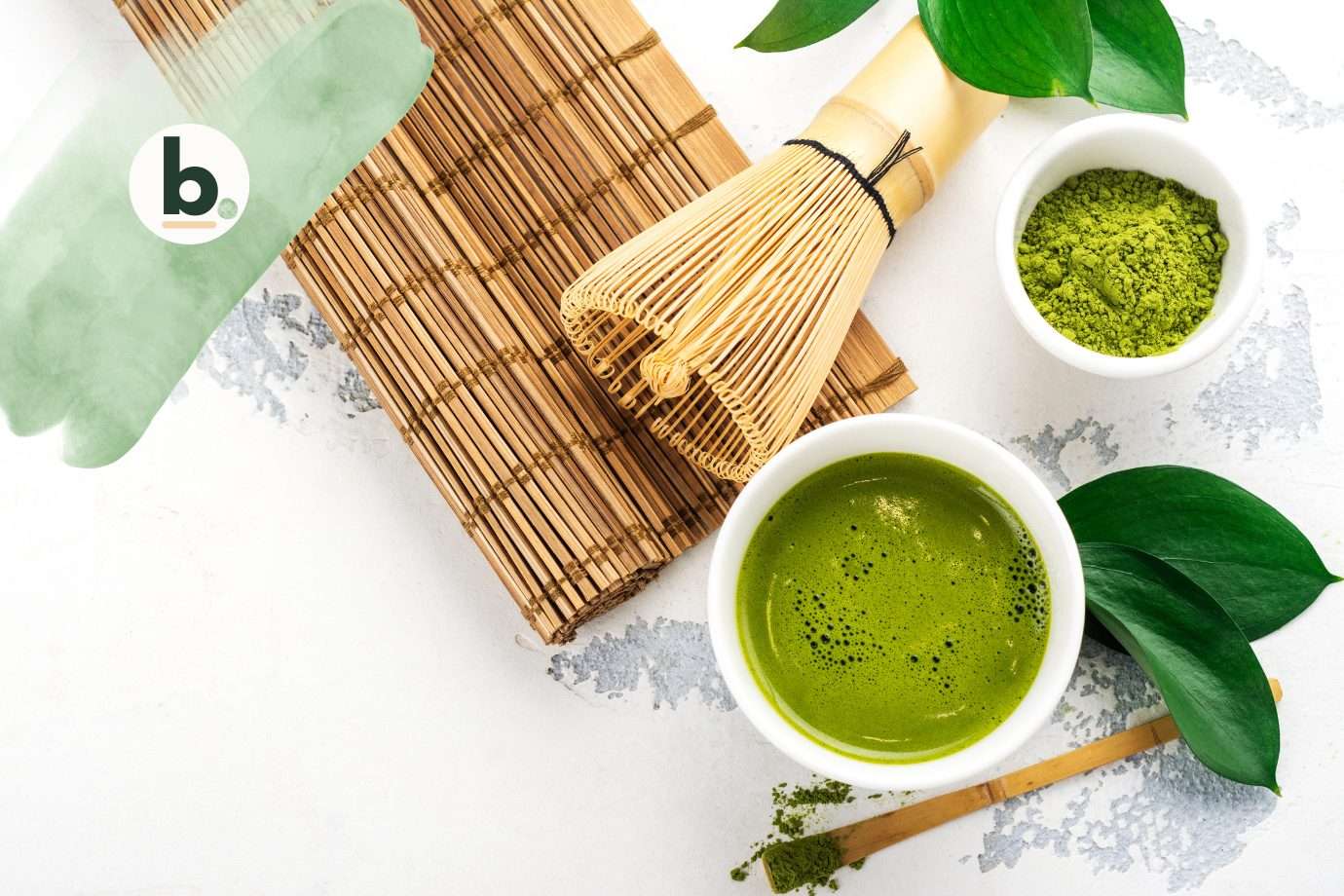
Matcha is a Japanese green tea whose leaves grow in the shade for a few weeks before picking, then are dried and ground into a very fine powder. You don't steep it: you whisk 1 to 2 g of powder into hot water, so you drink the whole leaf. You can drink it straight in a bowl or as a latte.
 Your latte at homeThe matcha made for lattesBarista No.1, the best-selling matcha in the shop, from Uji. In a 50 g or 100 g pouch, about 25 or 50 lattes.from $34.90 · See Barista No.1 →
If you see matcha everywhere, at cafés, in desserts, on social media, without really knowing what it is, this page is for you. I explain in simple words what matcha is, where it comes from, what it tastes like and how to drink it, with links to my more detailed guides whenever you want to go further.
What is matcha, exactly?
Matcha is a green tea powder made from one specific leaf, tencha: a tea leaf grown out of direct sunlight, steamed, dried without being rolled, then stripped of its stems and veins. Ground very finely, tencha becomes matcha.
That detail matters, because not every green powder is matcha. Japan's trade promotion organization (JETRO) spells it out: a powder made from a tea other than tencha is called "powdered tea", and it is mostly used for processing, in drinks or flavoured products. Real matcha always starts with shaded leaves.
The big difference from ordinary tea is what ends up in your cup. With steeped tea, you throw out the leaves and drink the water. With matcha, the powder blends into the water or milk: you drink the whole leaf, which explains its more intense taste, its bright green colour and its creamy texture.
If it's your first matcha and you mostly drink lattes, I suggest starting with my Barista No.1 ($52.90 for 100 g): an Uji matcha built for milk, hot or iced, at aboutabout $1.06 of matcha per cup a cup.

Or the Matcha Latte Kit: Barista No.1 and the Mini Shaker at a bundle price $83.90free shipping
Drinking it daily? Also on subscription: $50.25 delivered
$10 shipping, free from $80 · ships within Canada
14-day money-back guarantee on the matcha
Where does matcha come from?
Matcha comes from Japan, and its historic home is Uji, just south of the old imperial capital. According to Japan's Ministry of Agriculture, the history of Uji tea begins in 1191, when the monk Eisai brought tea back from Song dynasty China.
Eisai brought more than seeds: JETRO credits him with bringing powdered tea to Japan in its current form, along with a book on how to make and drink it, the Kissa Yōjōki. In the 15th century, the Ashikaga shoguns encouraged Uji's tea gardens. Then, in the 16th century, at the request of tea masters such as Sen no Rikyū, Uji growers developed shade cultivation under straw roofs: that is what gives a dark green matcha, rich in umami and less bitter.
Today, matcha is made in several regions of Japan, but Uji and Nishio remain the two historic names. My two matchas come from Uji, and the Ceremonial No.1 from the first spring harvest. If origins interest you, I have a full guide to Japanese matcha regions.
How is matcha made?
Matcha is made in six steps: the tea bushes are shaded, the young spring leaves are picked, steamed, dried without rolling, stripped of stems and veins, then ground on a stone mill or a very fine mill. The first five steps produce tencha; the last one turns it into matcha.
Shading is the key step. Deprived of sunlight, the leaf keeps more L-theanine, the amino acid behind its sweetness and umami, and makes fewer catechins, which bring bitterness. The mill turns slowly to get a powder fine enough to whisk into a foam. The full detail, step by step, is in my guide how is matcha made. What L-theanine and catechins mean for your health, I explain in is matcha healthy?

What's the difference between matcha and green tea?
Matcha is a green tea, but not like the others: its leaves grow in the shade, they aren't rolled, and you drink them ground instead of steeping them. A leaf green tea like sencha grows in the sun, is rolled, and the leaves are thrown out after steeping.
| Matcha | Leaf green tea (sencha) | "Powdered tea" | |
|---|---|---|---|
| Growing | In the shade before picking | In the sun | Varies |
| Leaf | Tencha: steamed, dried without rolling, no stems or veins | Steamed, rolled | A tea other than tencha, ground |
| How you drink it | Powder whisked into water or milk: you drink the whole leaf | Steeped, then the leaves are thrown out | Mostly in drinks and processed products |
| Taste | Umami, sweetness, little bitterness | Fresher and more astringent | Often more bitter and duller |
| Colour | Bright green | Yellow-green infusion | Duller green |
There is still no worldwide rule that reserves the word "matcha" for real matcha. In 2022, ISO published a technical report, ISO/TR 21380, describing matcha as a powder made from young tea shoots grown in the shade; Japan's NARO research institute, which led the work, noted at the time that there was no international consensus on the definition. That's why the origin, harvest and cultivar printed on the package count for more than the word "matcha" on its own. The full comparison, health included, is in my guide matcha vs green tea.
What does matcha taste like, and does it have caffeine?
Good matcha tastes vegetal and smooth: a round umami, close to a light broth, a note of seaweed, a little bitterness and a slightly sweet finish. In a latte, milk rounds it all out and leaves a creamy green tea flavour. If it tastes mostly like cut grass or bitter, the cause is often the quality of the powder or water that's too hot: I explain it all in my guide on what matcha tastes like.
Yes, matcha contains caffeine, because you drink the whole leaf. On average, 2 g of matcha contains about 65 mg of caffeine, with most matcha analyzed falling between 30 and 90 mg (Standard Tables of Food Composition in Japan, 2020, and published studies). The leaf also contains L-theanine. The full numbers and the comparison with coffee are in my guide on matcha caffeine, and daily guidelines in how much matcha per day.

Ceremonial, latte, culinary: what's the difference?
These words aren't official categories: they mostly describe what a matcha is meant for. A so-called ceremonial matcha is made from the most tender leaves of the first harvest, smooth and round, fine enough to drink straight. A latte matcha has a denser flavour that carries through milk instead of getting lost in it. A culinary matcha, often from later harvests, is more bitter: it holds its own in a cake, but disappoints in a bowl.
The right reflex is to choose based on what you'll make with it. For straight matcha, my ceremonial matcha guide explains the grades and what to look for. For lattes, my guide on matcha for lattes compares the options. And for cooking, I have a page on culinary or ceremonial matcha.
Bian Matcha has two matchas, one for each use, both from Uji:
- The Ceremonial No.1 Grand Cru ($57.90 for 50 g), single-cultivar Okumidori from the first harvest, in a 50 g tin or a 100 g pouch. It's meant first for drinking straight, and it's great in a latte too: its soft notes still shine through the milk.
- The Barista No.1 ($52.90 for 100 g), Yabukita and Okumidori cultivars, in a 100 g pouch, about 50 lattes. It's the matcha for lattes, desserts and smoothies.
If you want to understand the difference by tasting, the Discovery Pack ($129.90) brings the two together. And if you're still unsure, my guide to choosing your matcha helps you decide.

How do you drink matcha?
There are three main ways to drink matcha: straight, whisked into a little hot water (that's usucha, the everyday version in Japan), as a latte with hot or cold milk, and in the kitchen, in desserts and smoothies. In every case, the water should be hot, at 70-80 °C (160-175 °F), never boiling.
| How to drink it | Amount and method | The matcha to use |
|---|---|---|
| Straight, light (usucha) | 1 g in a bowl, 70 ml of water at 75 °C, whisked in a W motion with a chasen until a fine foam forms | Ceremonial No.1 Grand Cru |
| Straight, thick (koicha) | 3 to 4 g for 40 ml of water at 70 °C, blended slowly in circles | Ceremonial No.1 Grand Cru |
| Hot latte | 2 g of matcha and 20 ml of hot water (70-80 °C) in the Mini Shaker, shake, then add the hot milk | Barista No.1 |
| Iced latte | The same hot shot, poured over ice and cold milk | Barista No.1 |
| Desserts and smoothies | As the recipe says | Barista No.1 |
For a first try, a latte is the gentlest way in. The simplest method: 2 g of matcha and 20 ml of hot water (70-80 °C) in the Mini Shaker ($34.90), shake, then add the milk. My hot matcha latte and iced matcha latte recipes start there, and the Matcha Latte Kit ($83.90) brings together the Barista No.1 and the Mini Shaker.
To drink it straight, the traditional chasen method is in my guide how to make matcha, and the right temperature in the one on matcha water temperature. No bamboo whisk? My guide to making matcha without a whisk compares the shaker, the frother and the jar. Once opened, keep your powder cool and away from light: it's all in my guide on how to store matcha.
In the same series
- Next, for straight matcha: how matcha is made
- Next, for lattes: matcha for lattes
- The taste: what matcha tastes like
- The pillar guide: ceremonial matcha
- The matchas to go with it: Barista No.1 and Ceremonial No.1 Grand Cru
FAQ: what is matcha?
What is matcha?
Matcha is a Japanese green tea in powder form. Its leaves grow in the shade for a few weeks before picking, are steamed, dried without being rolled, then ground very finely. Instead of steeping it, you whisk the powder into hot water or blend it with milk: you drink the whole leaf, which gives it a more intense taste than a steeped tea.
What is matcha made of?
Matcha is made of 100% tea leaves, from the same plant as every tea. These shade-grown leaves become tencha after steaming, drying and removing the stems and veins, then the tencha is ground into powder. Pure matcha contains no added sugar, milk or flavouring: it's just the leaf.
What is matcha powder?
Matcha powder is tencha, a shade-grown tea leaf, ground very finely, traditionally on a stone mill, so it blends into water or milk and makes a fine foam. It's powdered because you drink it instead of steeping it. This tradition goes back to the powdered tea brought from China in the 12th century by the monk Eisai, which gave rise to Japanese matcha.
Is matcha green tea?
Yes, matcha is a green tea, but it's grown and prepared differently. Its leaves grow in the shade, which gives them more umami and less bitterness, they aren't rolled, and you drink them ground. With a leaf green tea like sencha, you steep the leaves and throw them out, while with matcha, you drink the whole leaf.
Where does matcha come from?
Matcha comes from Japan. Its historic home is Uji, where the history of tea begins in 1191 with the monk Eisai, and where shade cultivation was developed in the 16th century for the tea masters. Uji and Nishio remain the two historic names of Japanese matcha. Both Bian Matcha matchas come from Uji, and the Ceremonial No.1 from the first spring harvest.
How should a beginner drink matcha?
The easiest way to start is a latte: 2 g of matcha and 20 ml of hot water at 70-80 °C, shaken in a mini shaker, then hot or cold milk. The milk softens the taste. To drink it straight, whisk about 1 g of matcha into 70 ml of water at 75 °C with a bamboo whisk until a fine foam forms.
Does matcha have caffeine?
Yes, about 65 mg on average for 2 g of matcha: the numbers and sources are in my guide on matcha caffeine.
Sources
- Uji Tea, Traditional Foods in Japan, Ministry of Agriculture, Forestry and Fisheries of Japan (MAFF), accessed November 1, 2026.
- Matcha, Highlighted Japanese Ingredients, JETRO (Japan External Trade Organization), accessed November 1, 2026.
- A technical report on the definition of matcha is published by ISO (ISO/TR 21380:2022), NARO, Institute of Fruit Tree and Tea Science, accessed November 1, 2026.
- Matcha caffeine: where the numbers come from (Standard Tables of Food Composition in Japan, 2020, and published studies), Bian Matcha, accessed November 1, 2026.
Guide by Greg, Bian Matcha's dad. Questions? Write to me.