

Ceremonial, Premium, Culinary Matcha: What Do These Words Mean?
There is no official standard for matcha grades. What each label means in practice, and how to avoid paying for a word instead of a quality.
Matcha grades (ceremonial, premium, culinary) are governed by no official standard: neither Japan nor any body defines or certifies them. They are commercial cues, useful when a seller is serious, misleading when they're not. In practice, "ceremonial" means a matcha you drink pure, "culinary" a matcha for cooking, and "premium" floats somewhere between the two. Here is what hides behind each word, and how to look past the label.
Are there official matcha grades?
No, and that's the first thing to know. Unlike wine, olive oil or specialty coffee, matcha has no regulated grading system. In Japan, quality is mostly described by region, cultivar and harvest, not by a "ceremonial" stamp. The words you see on Western pouches are marketing vocabulary. That doesn't make them useless, but it means they commit to nothing: a brand can write "ceremonial" on any powder, completely legally.
What each label means
| Label | Leaves | Use | Taste |
|---|---|---|---|
| Ceremonial | First harvest, young shaded leaves | Drunk pure, with water, or as a delicate latte | Smooth, umami, no bitterness |
| Premium / latte | First or second harvest | Everyday lattes, milk drinks | Round, fuller, slight bitterness tolerated |
| Culinary | More mature leaves, late harvests | Baking, smoothies, cooking | Strong, bitter, made to be sweetened |
Ceremonial grade
This is the top of the pyramid: young first-harvest leaves, shaded for three to four weeks, stone-ground. Soft enough to drink pure, with nothing to mask the taste. It's also the most overused label, precisely because it sells.
Premium (or "latte") grade
A notch below, or sometimes just a ceremonial calibrated for milk. This is the grade for the everyday latte: good enough to taste the tea under the foam, without the price of a top ceremonial. Names vary from brand to brand, it's the blurriest zone.
Culinary grade
More mature leaves, richer in bitter catechins. Perfect for baking, smoothies or sauces, where sugar and other ingredients balance the bitterness. Drunk pure, though, it disappoints. We compared the two uses in detail in culinary or ceremonial matcha.
Why these words exist anyway
If nothing regulates them, why use them? Because they help the busy shopper: in one word, they signal a use. The problem isn't the vocabulary, it's trusting it blindly. A transparent seller uses "ceremonial" to help you choose, and backs the word with facts: region, cultivar, harvest. An opportunistic seller uses it to inflate a price with nothing behind it.
How not to pay for a word instead of a quality
- Look for the facts next to the grade: Japanese region, cultivar, first harvest.
- Check the color and texture (jade green, fine powder).
- Be wary of a cheap "ceremonial": the real thing is never dirt cheap.
The full method is in how to recognize good matcha.
Which grade for which use?
The good news is you don't have to become an expert. If you drink your matcha pure or in a latte where you want to taste the tea, get a ceremonial. For an everyday latte, a grade made for milk is enough and costs less. For cooking, a culinary does the job. In our range, it comes down to two profiles: the Ceremonial No.3 for tasting, the Barista No.1 for lattes.
Bian Matcha, Quebec
Two grades, two uses, zero fog.
We kept it simple: a ceremonial to drink pure, a matcha calibrated for milk. Both first harvest, 100% Japanese, with their origin owned up front.
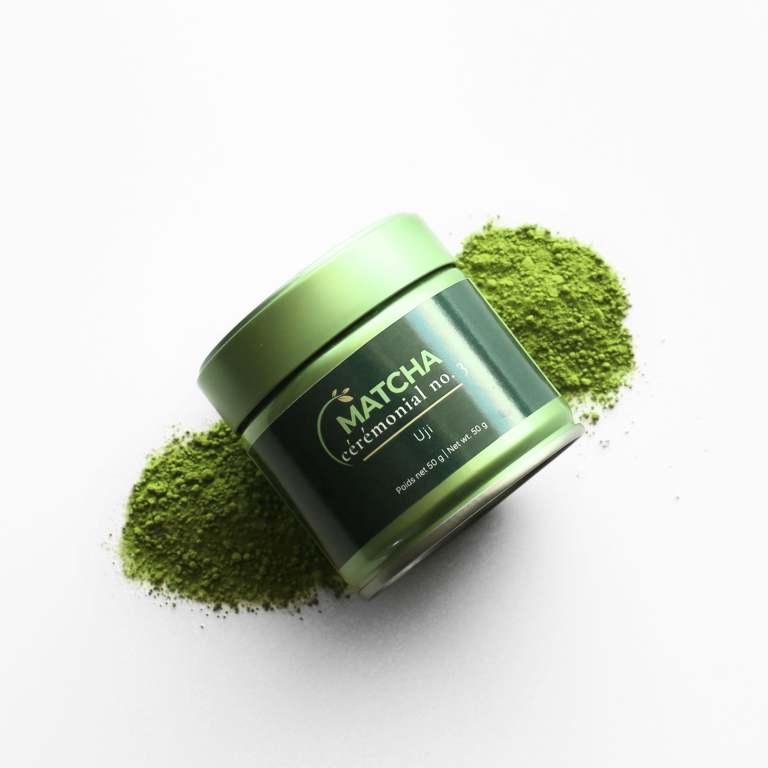
Okumidori from Uji, first harvest. The grade you drink pure, with nothing to mask the taste.
$54.90 See the Ceremonial No.3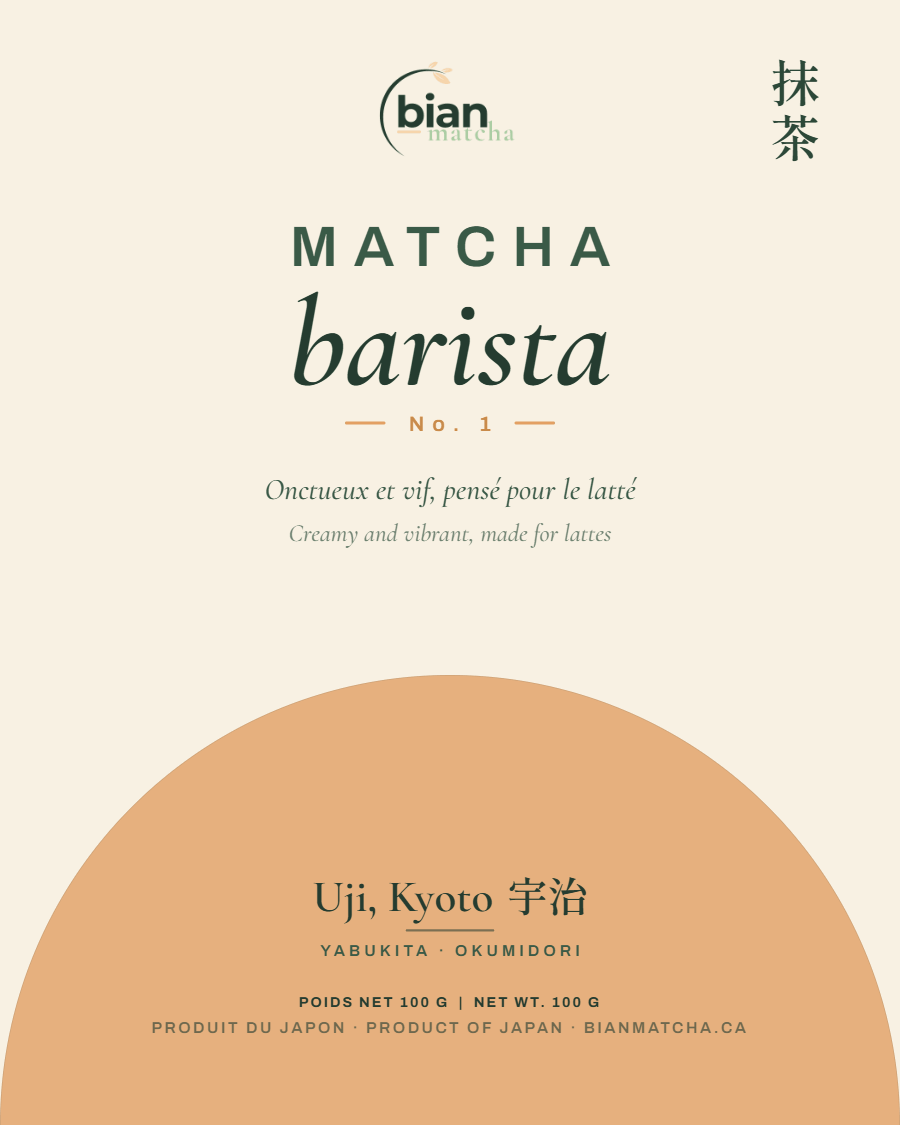
From Uji, a dense profile that carries through milk. The everyday latte, without paying top-ceremonial prices.
$69.90 See the Barista No.1FAQ, matcha grades
Are there official matcha grades?+
No. No body and no law, in Japan or elsewhere, defines or certifies matcha grades. Ceremonial, premium and culinary are commercial cues, not regulated labels.
What's the difference between ceremonial and culinary matcha?+
Ceremonial comes from young first-harvest leaves, smooth and made to be drunk pure. Culinary comes from more mature, more bitter leaves, made for cooking and baking, where the bitterness is balanced by other ingredients.
Is premium matcha as good as ceremonial?+
"Premium" is the blurriest label: depending on the brand, it's a notch below ceremonial or a ceremonial calibrated for milk. For an everyday latte, it's often better value. To drink pure, go for a true ceremonial.
Can you trust the word "ceremonial" on a pouch?+
Only if it's backed by facts: Japanese region, cultivar, first harvest, and a jade-green color. The word alone has no legal value and can appear on a mediocre powder.
Which grade should I choose for a latte?+
A grade made for milk (often called premium, latte or barista) is plenty: its denser profile carries through milk. Save the ceremonial for the moments you drink your matcha pure.
To choose with confidence, learn to recognize good matcha, see why origin matters, and return to the ceremonial matcha guide for the essentials at a glance.