


Organic Matcha or Not: Does It Really Make a Difference?
The organic label guarantees the absence of synthetic pesticides, not the quality of the tea. What organic tells you, what it doesn't, and how to decide without paying for a label.
The organic label guarantees one thing: that the tea was grown without synthetic pesticides or fertilizers. That's useful, but it says nothing about the grade, the color, the umami, the origin or the freshness. In other words, an organic matcha can be dull and bitter, and a first-harvest matcha from Uji can be excellent without the logo. Organic is therefore one criterion among several, not a shortcut to quality. Here is how to weigh it so you don't pay for a word instead of good tea.
What does the organic label actually guarantee?
An organic certification (Canada Organic, Japan's JAS, the European label) attests to the growing method: no synthetic pesticides or chemical fertilizers, and an audited set of rules. It's information about the farming method, and it's entirely legitimate to want it, especially for a product like matcha where you drink the whole leaf, not just an infusion you discard.
But a certification judges neither taste, nor grade, nor terroir. It doesn't tell a young first-harvest leaf from a late, bitter one. Two organic matchas can be worlds apart in the cup.
What organic doesn't tell you
- The grade. Organic doesn't mean ceremonial. A bitter culinary can be organic.
- The harvest. The label doesn't distinguish first harvest from late harvest.
- The origin and cultivar. An organic matcha can come from anywhere, with no specific terroir.
- Freshness. An organic but time-oxidized powder will have lost its color and taste.
That's why an unlabeled matcha can easily outperform a cheap organic one: what you taste is the origin, the harvest and the freshness, not the logo. We detail those signs in how to recognize good matcha.
Should you worry about pesticides in matcha?
The question is legitimate, precisely because you consume the whole leaf. The best answer isn't a logo, but the producer's transparency and the origin. Japanese tea is subject to strict farming standards, and a serious producer owns its source, its cultivar and its harvest. A clear origin, ideally down to the terroir and cultivar, often says more than a label slapped on an anonymous powder. Conversely, it's the matcha with no origin, no traceability and a slashed price that should worry you, organic or not.
Organic or not: how to decide
- Look first at the real quality criteria: origin, harvest, color, texture, taste.
- Favor a producer who is transparent about source and cultivar.
- Organic is a plus when it's added to real quality, not a substitute for it.
Our position, in full transparency
At Bian Matcha, we bet on what you can taste: an owned Japanese origin (Uji), a named cultivar (Okumidori for the No.3), the first harvest, and clear traceability from leaf to cup. That, in our view, is where a matcha's quality is decided, far more than the presence or absence of a logo. You choose knowingly, on facts, not on a shortcut.
Bian Matcha, Quebec
Quality is judged by origin, not by a label.
Uji, single-cultivar Okumidori, first harvest, clear traceability: the real markers of good matcha, owned in plain sight.
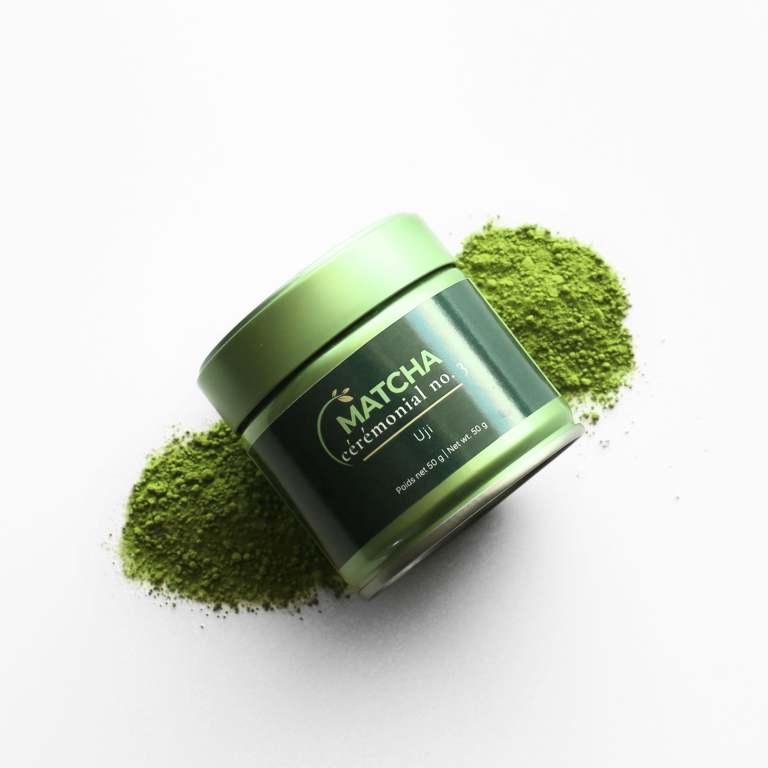
Okumidori from Uji, first harvest, clear traceability. Quality through the facts that truly matter.
$54.90 See the Ceremonial No.3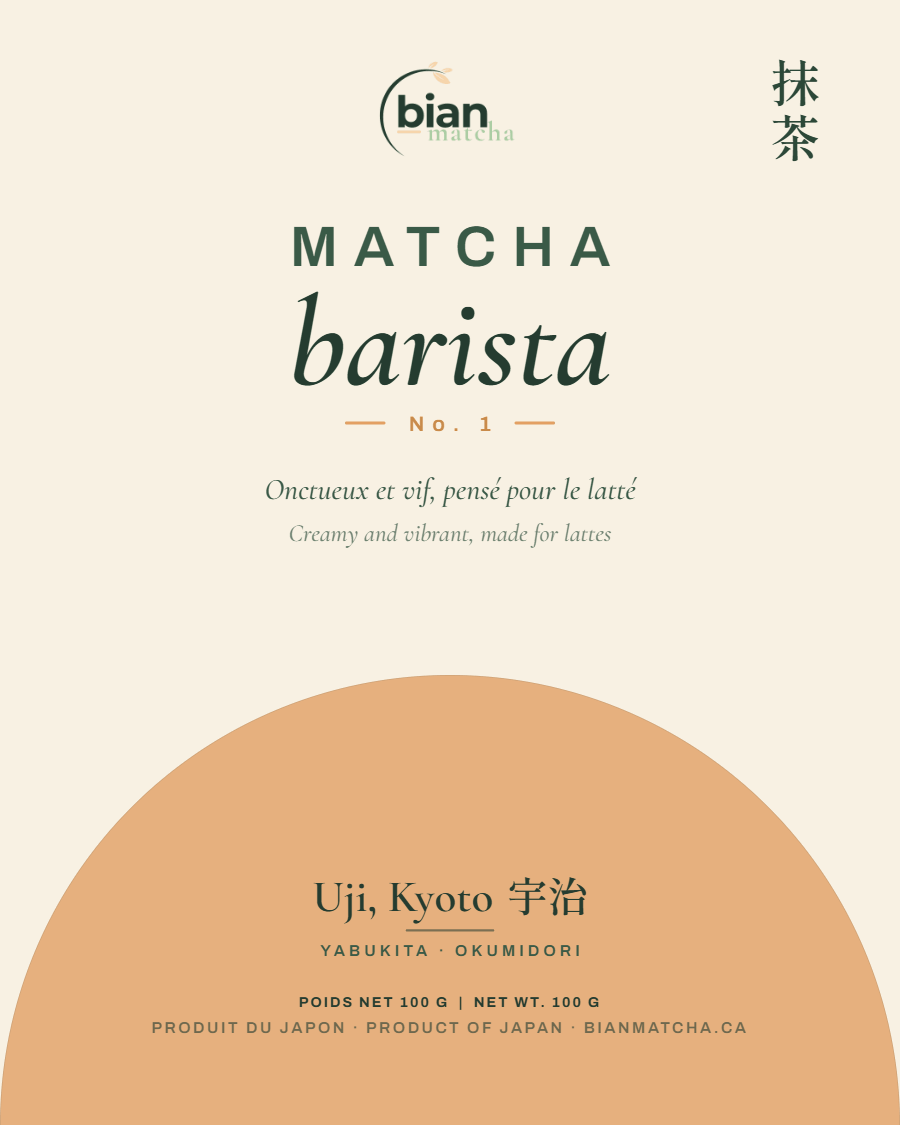
First harvest, clear origin, a profile built for milk. The everyday latte, with no compromise on provenance.
$69.90 See the Barista No.1FAQ, organic matcha
Is organic matcha better?+
Not necessarily. The organic label guarantees the absence of synthetic pesticides, but not the grade, origin, harvest or freshness. A non-organic first-harvest matcha from a good origin can be clearly superior to a low-grade organic one.
What does the organic label guarantee on matcha?+
Only the growing method: no synthetic pesticides or chemical fertilizers, under an audited set of rules. It's information about the farming method, not about the tea's taste quality.
Are there pesticides in matcha?+
As with any agricultural product, it depends on the cultivation. Japanese tea is subject to strict standards, and the best guarantee remains a producer transparent about origin and traceability. A matcha with no clear provenance is more concerning than an unlabeled but well-traced one.
How do I choose if I don't rely on the label?+
Look at the real criteria: a stated Japanese origin, first harvest, jade-green color, fine texture and an umami taste without bitterness. Organic then becomes a plus, not a prerequisite.
Is Bian Matcha organic?+
We bet on what you can taste: an owned Japanese origin (Uji), a named cultivar, first harvest and clear traceability. In our view, that's where a matcha's quality is decided, more than the presence of a logo.
To dig deeper, see how to recognize good matcha, why origin matters, and find the essentials in the ceremonial matcha guide.