
The Best Coffee Alternative: The Honest Guide
By the Bian Matcha team, a Quebec company
Coffee gives you palpitations, a 2 p.m. crash or restless nights, but dragging your fatigue around all day is not an option? You are looking for the best coffee alternative: a drink that truly wakes you up, minus the rollercoaster.
Matcha checks every box, and we will show you why: an honest comparison of the options, a gentle transition plan, and what changes in your body once you switch.
Why people look for a coffee alternative
Coffee is the most consumed drink in the world. But according to a review on PubMed, caffeine creates a mild physiological dependence and recognized withdrawal symptoms (headaches, irritability, fatigue) in regular consumers.
The most common reasons to seek an alternative:
- Mid-day energy crash: what researchers call the "rebound adenosine effect", when the caffeine wears off and all the accumulated adenosine hits you at once.
- Anxiety and palpitations: caffeine triggers the release of cortisol and adrenaline, which worsens stress in sensitive people.
- Sleep issues: caffeine half-life is 5-6 hours on average, a 2 p.m. coffee is still partially active at midnight.
- Digestive problems: coffee is acidic (pH 4.5-5.5) and can irritate the stomach or worsen reflux.
- Ritual dependence: many people don't really want the caffeine, but need the morning hot drink ritual.
The good news: serious alternatives exist that address each of these problems, depending on what you're trying to solve.
How to evaluate a real coffee alternative
Before presenting the options, here are the criteria that actually matter:
- Energy effect: does it really give energy, or just superficial stimulation?
- Duration: how long does it last, and is there a crash?
- Stomach tolerance: is it gentler than coffee?
- Adoption ease: easy to fit into a daily routine?
- Scientific evidence: are the effects documented in serious studies?
Bian Matcha, Quebec
Ready to try matcha as a coffee alternative?
Start with the right tools. Two options depending on how you want to prepare your matcha.
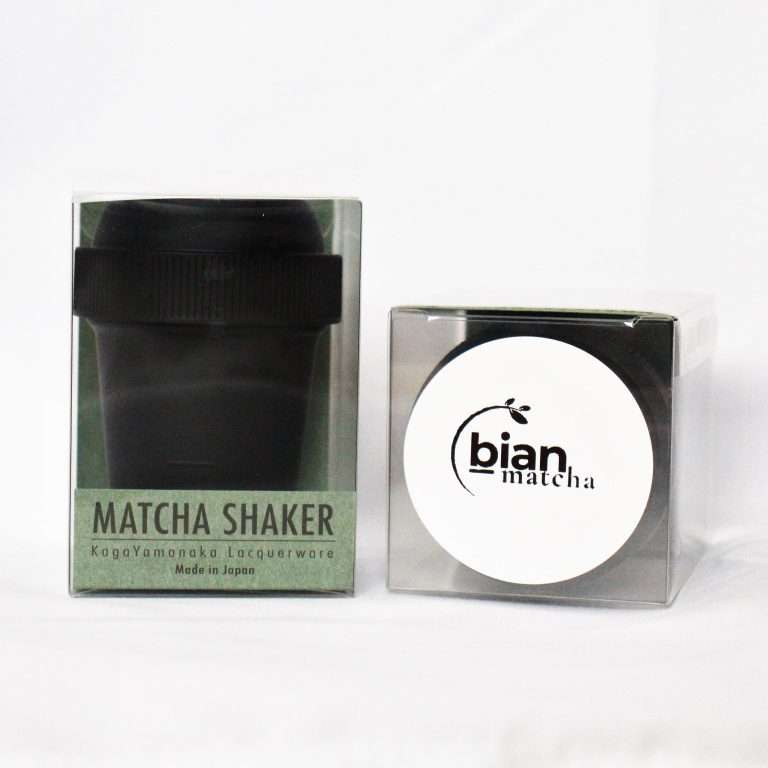
Your matcha ready in 30 seconds. Twist, shake, drink. Made in Japan, works with any Bian Matcha. Perfect for busy mornings.
$29.90 View the Mini Shaker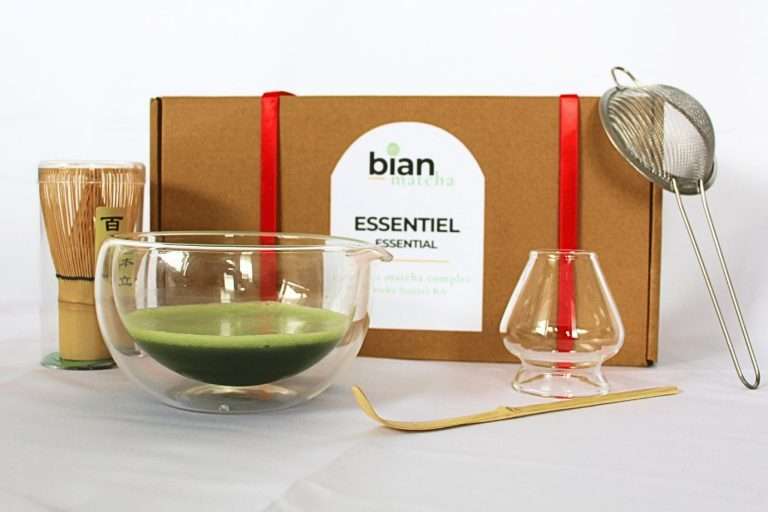
Chasen, double-walled glass bowl, naoshi, chashaku, sieve. Everything for a refined ritual. Available with or without Ceremonial Matcha No.3.
From $45.90 View the Essential KitThe 5 best coffee alternatives: honest comparison
1. Japanese matcha: the best alternative for energy without crash
Matcha is a powder of green tea leaves (Camellia sinensis) shade-grown and finely ground. It contains caffeine (around 50 to 70 mg per cup) but also L-theanine, an amino acid found almost nowhere else.
It's this combination that changes everything. A study published in Nutritional Neuroscience (PubMed, 2010) showed that 97 mg of L-theanine combined with 40 mg of caffeine significantly improved accuracy on demanding cognitive tasks while reducing subjective fatigue. L-theanine modulates caffeine's effect: removes the jitters, palpitations, anxiety, and leaves focus and clarity.
Concrete results:
- Progressive energy (kicks in 30-45 minutes after drinking)
- Lasts 4-6 hours, with a smooth descent
- Little to no crash
- Less anxiety than coffee for sensitive people
- Gentler on the stomach (less acidic than coffee)
Matcha is also rich in EGCG catechins, among the most powerful antioxidants studied. According to a PubMed review, green tea catechins are linked to documented cardiovascular and anti-inflammatory benefits.
For a complete comparison between matcha and coffee: Matcha vs Coffee: which energy is actually better?
2. Yerba mate: stimulating, but no anti-anxiety mechanism
Yerba mate (Ilex paraguariensis) is a South American infusion containing about 70-85 mg caffeine per cup, theobromine and antioxidants. According to a PubMed review, mate has interesting antioxidant and anti-inflammatory properties, though cognitive effect studies are more limited than for matcha.
It does not contain L-theanine. Profile is closer to coffee, stimulating but without the anxiety-modulation mechanism. Can also irritate the stomach in some people.
3. Chicory: the best caffeine-free option
Chicory (roasted root) resembles coffee in color and slightly bitter taste, but contains zero caffeine. No nervous system stimulation, but contains inulin, a beneficial prebiotic fiber. A PubMed study confirms inulin's positive effects on gut microbiota and digestion. The best option if you want to keep the hot drink ritual without any stimulation.
4. Green tea: a gentle transition, but less concentrated
Green tea contains caffeine (25-50 mg) and L-theanine like matcha, but in much smaller amounts. Matcha is made from whole leaves ground into powder, so its L-theanine and catechin concentration is 10-15 times higher than regular brewed tea. Green tea remains a good option for very caffeine-sensitive people.
5. Adaptogenic mushroom coffee
Mushroom coffees (Lion's Mane, Reishi, Cordyceps) often combine roasted barley with functional mushrooms. They generally contain less caffeine than regular coffee and aim to support focus and reduce stress. Scientific data is promising but still limited in large-scale randomized trials. Less well-documented efficacy than matcha.
Comparison table: coffee alternatives
| Alternative | Caffeine | Duration | Crash | Anxiety | Stomach | L-theanine |
|---|---|---|---|---|---|---|
| Japanese matcha ⭐ | 50-70 mg | 4-6 h | Rare | Low | Gentle | Yes |
| Yerba mate | 70-85 mg | 3-5 h | Moderate | Possible | Variable | No |
| Chicory | 0 mg | , | None | None | Very gentle | No |
| Green tea | 25-50 mg | 2-3 h | Rare | Low | Gentle | Yes (low) |
| Mushroom coffee | Variable | 3-4 h | Low | Low | Gentle | No |
| Regular coffee | 80-100 mg | 2-3 h | Frequent | Possible | Irritating | No |
Bian Matcha, Quebec
You drink lattes? The Barista No.1 is for you.
Specifically selected to hold up in milk, hot or cold. Matcha energy in your morning latte, no crash, no jitters.
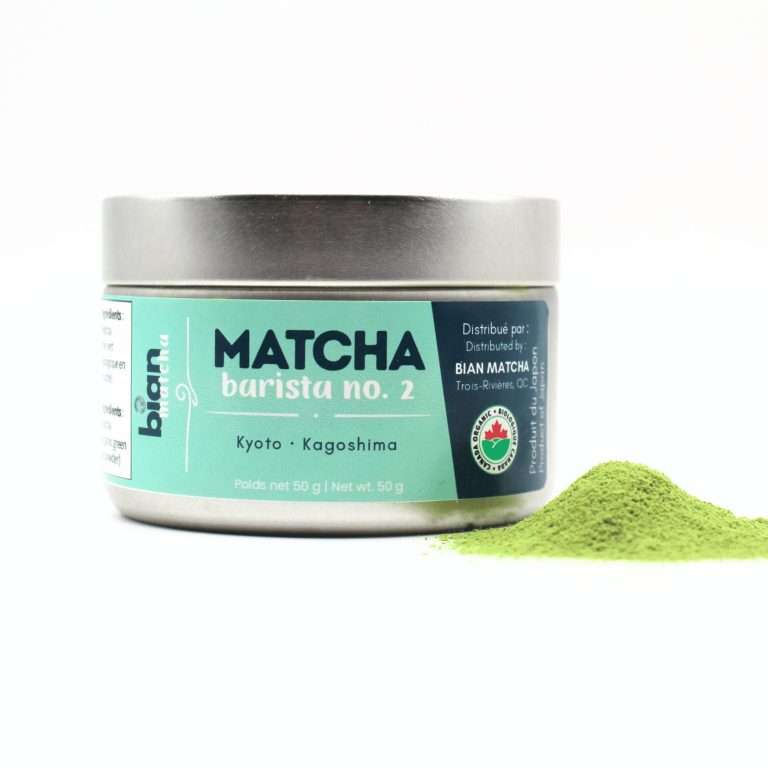
Round, balanced profile, excellent in hot or plant-based milk. 100% Japanese, carefully sourced. No sugar, no additives.
$69.90 View Barista No.1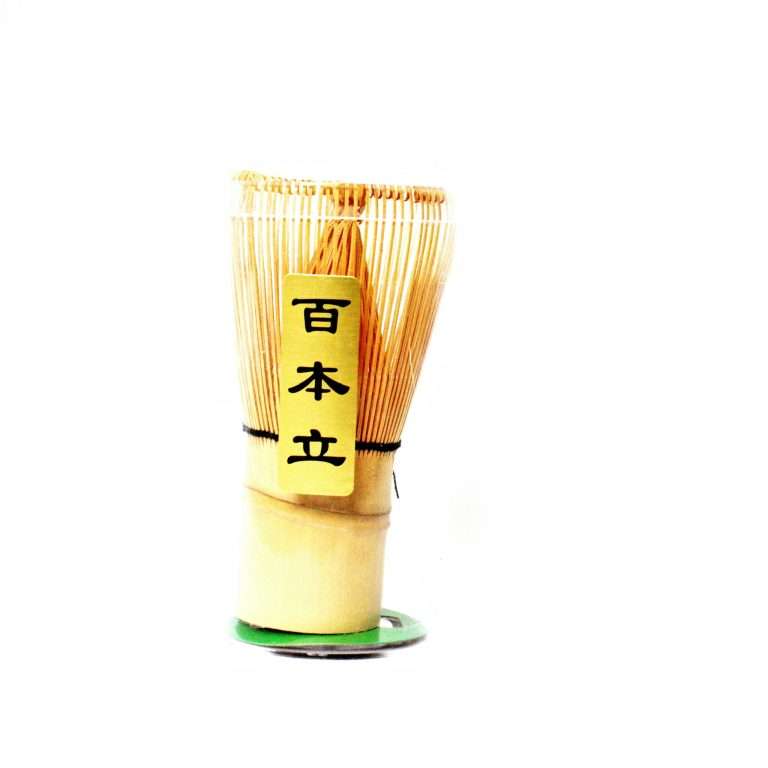
The traditional Japanese tool for fine, even foam. Essential for precise preparation, with water or in a latte.
$15.90 View ChasenWhy matcha is the best coffee alternative for most people
Among all the listed alternatives, matcha is the only one that combines:
- Real cognitive stimulation: with enough caffeine to make a real difference.
- Anxiety-modulation mechanism: thanks to L-theanine, documented in dozens of published studies.
- Lasting energy without crash: the effect lasts 4-6 hours with a progressive descent.
- Documented antioxidant benefits: matcha's EGCG catechins are among the most concentrated antioxidants you can consume.
No other alternative combines these four elements at the same time. Chicory doesn't stimulate. Mate has no L-theanine. Green tea has it, but in much lower quantity. Mushroom coffees have an interesting profile but less well-documented scientifically.
For complete scientific analysis, mechanisms, adenosine, L-theanine, detailed studies: Matcha vs Coffee: which energy is actually better?
How to replace coffee without suffering
Quitting coffee cold turkey isn't necessary and is often counterproductive. Caffeine creates a mild physiological dependence, and abrupt cessation can cause headaches, irritability, and fatigue for 2-7 days.
Week 1: progressive substitution
- Days 1-3: Replace one coffee (ideally the morning one) with matcha. Keep the rest of your routine.
- Days 4-7: Replace two coffees with matcha. Notice how you feel in the afternoon.
Week 2: observation
- Track your end-of-day energy. Is the 3 p.m. crash less marked?
- Track your anxiety level. Do you feel less "on edge"?
- Track sleep quality. People who reduce coffee often notice quick improvement.
We've written a complete guide on this transition: How to replace coffee without fatigue.
Which type of matcha to choose as a coffee alternative?
Low-quality matcha is bitter, dull, and unpleasant. That's often what people try before concluding "matcha isn't for me". A quality Japanese ceremonial matcha is a completely different experience.
Criteria that matter:
- Japan origin: shading standards (3-4 weeks before harvest) and processing are unmatched.
- Vivid green color: sign of high chlorophyll and L-theanine content. A dull or yellowish matcha has lost its properties.
- No sugar or additives: pure matcha doesn't need anything else.
- Targeted use: ceremonial matcha is drunk plain with water, barista matcha is selected to hold up in milk.
Bian Matcha, Quebec
Everything you need to start right.
The Essential Kit gathers chasen, double-walled glass bowl, naoshi, chashaku and sieve. Available with 25g of Ceremonial Matcha No.3 to start complete from day one.
Double-walled glass bowl, chasen, glass naoshi, chashaku, sieve. Selected by Bian Matcha to properly accompany your daily matcha. Great gift or for yourself.
From $45.90 View the Essential KitNo time to pull out the whisk every morning? The Mini Shaker gives you matcha ready in 30 seconds. Made in Japan, no clumps, works with all our matchas.
$29.90 View the Mini ShakerConclusion: what's the best coffee alternative?
If you want lasting energy, no crash, no anxiety, and something scientifically documented, Japanese matcha is the best coffee alternative available today.
It's not a trend. It's the only natural drink combining caffeine and L-theanine, with enough concentration to make a real difference. Science confirms it, studies are published in peer-reviewed journals.
Other alternatives by profile:
- Yerba mate: if you want strong stimulation and tolerate caffeine well.
- Chicory: if you want to eliminate caffeine entirely.
- Green tea: if you want a very gentle transition.
- Mushroom coffee: if you're into adaptogens.
To understand the difference between matcha and coffee: Matcha vs Coffee: which energy is actually better?
To transition progressively: How to replace coffee without fatigue.
Scientific sources:
- Giesbrecht et al. (2010), "L-theanine + caffeine improves cognitive performance", Nutritional Neuroscience, PubMed
- Camfield et al. (2014), review of 11 RCTs on L-theanine and caffeine, PubMed
- Nehlig (2010), "Caffeine and adenosine", Journal of Alzheimer's Disease, PubMed
- Review on EGCG catechins and antioxidant effects, PubMed
- Review on yerba mate and antioxidants, PubMed
- Study on chicory inulin and gut microbiota, PubMed
FAQ, Best Coffee Alternative
What is the best coffee alternative?+
Japanese matcha is the best coffee alternative for those seeking lasting energy without crash. It contains caffeine combined with L-theanine, which modulates caffeine effects for more progressive, less anxiety-inducing energy. The only drink combining these elements naturally and with documented science.
Does matcha give as much energy as coffee?+
Matcha contains 50-70 mg of caffeine per cup, vs 80-100 mg for drip coffee. Energy is slightly less intense at start, but lasts longer (4-6h vs 2-3h for coffee) and without crash. Most people who switch report more stable overall energy through the day.
Which coffee alternative if I'm anxious?+
Matcha is the best option for anxious people. The L-theanine it contains is documented to reduce caffeine's anxiety-inducing effects while maintaining focus. Chicory (caffeine-free) is also an option if you want to eliminate stimulation entirely.
Can I replace coffee with matcha without losing energy?+
Yes. Matcha contains enough caffeine for real stimulation. The transition can be slightly difficult the first 3-5 days if you have heavy coffee intake, but most people notice more stable energy after a week. We recommend a progressive 7-14 day transition rather than abrupt cessation.
Is yerba mate a good coffee alternative?+
Mate is a stimulating alternative with longer-lasting effect than coffee. It contains no L-theanine, so its profile is closer to coffee than matcha. Good option for those who tolerate caffeine well and want intense stimulation without radically changing their drink.
Does chicory really replace coffee?+
Chicory replaces the ritual (hot drink, slightly bitter taste) but not the stimulating effect, since it contains no caffeine. The best option to eliminate stimulation entirely. Contains inulin, a beneficial prebiotic fiber for gut flora.
Are all matchas equal as a coffee alternative?+
No. Low-quality matcha (grown outside Japan, blended, or low-grade) can be bitter, ineffective and disappointing. A quality Japanese ceremonial matcha has vivid green color, soft umami taste, and much higher L-theanine content. Quality is essential to feel the real difference with coffee.
Bian Matcha, Quebec
Ready to replace your coffee with matcha?
100% Japanese, carefully sourced. No sugar, no additives. Shipped from Quebec.
Round, structured profile that holds up in milk. The morning latte coffee alternative, no crash, no jitters. 50g.
$69.90 Order Barista No.1Your matcha in 30 seconds, no whisk, no sieve. Made in Japan. Perfect to start without complicating your life.
$29.90 View Mini Shaker